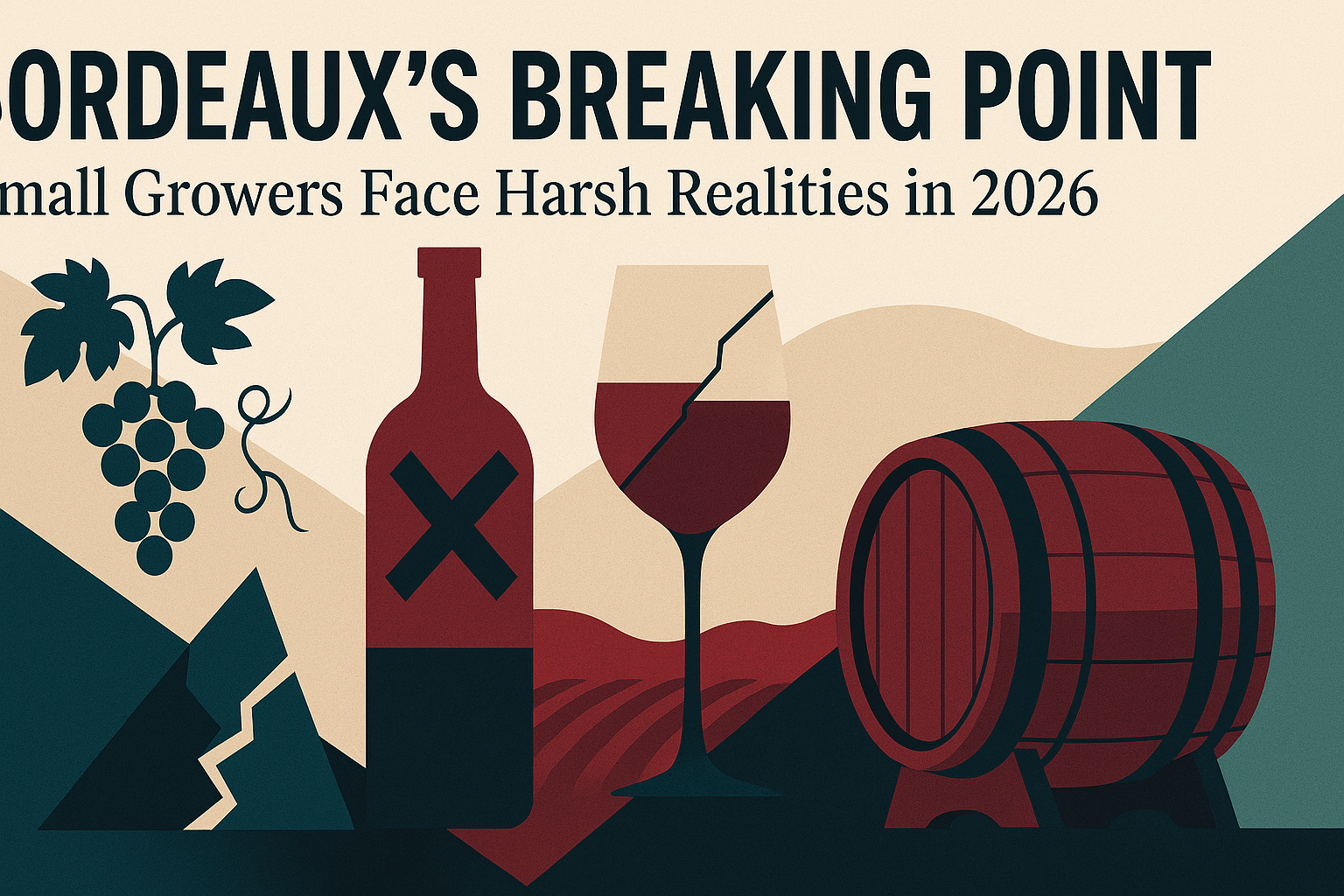

Bordeaux’s Breaking Point: Small Growers Face Harsh Realities in 2026
Bordeaux’s reputation is grand cru; the reality on the ground is anything but. Wine-Searcher reports another tragedy in the region, spotlighting the human cost behind the market’s squeeze on small growers. As one line in their coverage puts it, “More heartbreaking news from Bordeaux this week.” Wine-Searcher
Why This Matters
Behind every great bottle is a story, and this one matters. It reflects broader trends shaping how wine is made, sold, and enjoyed. Stay curious—your palate will thank you.
If you’ve been tracking the last few years: Covid kneecapped on-premise sales, tariffs pinched exports, China’s demand cooled, and inventories stacked up like surfboards after a flat spell. For ex-grower Guillaume Petregne in Saint-Yzans-de-Médoc, debt and disappearing demand led to a decision that no family should have to make. His words—painfully simple—tell the story: “I told myself: you can’t go on like this.” Wine-Searcher
Key Takeaways
- Key themes: Bordeaux, Médoc, small growers—stay informed on these evolving trends.
- The takeaway? Keep exploring, keep tasting, and don’t be afraid to try something new.
Style Snapshot: What’s at Stake in Bordeaux
When we talk Bordeaux, we’re talking dry, structured reds built for balance and longevity. The Left Bank (think Médoc and its communes) leans Cabernet Sauvignon; the Right Bank features more Merlot. Even entry-level bottlings aim for clean fruit, moderate alcohol, and a firm spine of tannin. It’s a style that’s supposed to be resilient—age-worthy, food-friendly, dependable.
Best occasion: a slow dinner where conversation matters as much as the wine. Best pairing direction: savory foods with fat or umami—grilled meats, mushrooms, or aged cheeses—to soften tannins and let the fruit speak.
That classic profile is exactly why Bordeaux became the world’s benchmark. But the strength is also the Achilles’ heel: the style requires investment (vineyard work, oak, time), and when demand misfires, producers can’t pivot overnight to a quick, new market trend. The result? Inventory pressure and cash flow anxiety, especially for family estates without deep pockets.
Context: Demand Dip, Debt Rise, and the Human Cost
Wine-Searcher outlines how one family’s century-old domaine couldn’t outrun a perfect storm: a sales freeze, mounting bills, and a decision to step back under threat of bankruptcy. In a village like Saint-Yzans-de-Médoc, this is more than business—it’s identity, legacy, and community. Neighbors, bistro owners, and fellow growers feel the ripple. The heartbreak isn’t a headline; it’s the daily aftershock.
Common wisdom says Bordeaux always bounces back. And yes, the top crus (First Growths, blue-chip Right Bank names) remain global darlings. But the backbone of the region—the small châteaux that actually keep Bordeaux diverse and affordable—don’t ride the same safety net. When export demand stutters or intermediaries tighten terms, it’s the family landholders who absorb the impact first.
What’s encouraging? Real conversations about mental health and economic realities are finally entering wine’s mainstream. That’s overdue. We celebrate terroir, we should also honor the hands that farm it—and the systems that keep those hands steady.
Elsewhere in Wine: Sprite, Sermons, and Solar Umbrellas
Not all the week’s headlines were heavy. Lionel Messi casually confirmed he mixes red wine with Sprite—apparently a thing in Córdoba. File under: not for your Clos de la Roche night, but hey, culture is culture.
On the more contemplative side, a Florida priest launched a podcast on the intersection of faith, wine, and music—proof the grape still sparks deeper conversations. Meanwhile, in Burgundy, a solar-powered, robotic vineyard umbrella took home a CES innovation award, promising protection from frost, hail, sunburn, and fungal pressure. I’ll take any tech that gives growers a fighting chance—especially as weather becomes less chill than a January swell.
And in Spain, researchers still need thousands of participants for a long-term study on moderate wine consumption within the Mediterranean Diet. Science, not wishful thinking, should steer the health debate—so cheers to data.
Closing Takeaway
Bordeaux’s small growers are at a breaking point, and the tragedy is real. The region’s dry, structured reds—especially Cabernet-heavy Médoc styles and Merlot-forward Right Bank blends—remain the world’s yardstick. But to protect that legacy, the industry needs pragmatic support: smarter market channels, mental health resources, and climate tools that actually help farmers survive the season.
If you love Bordeaux, consider reaching for bottles from lesser-known communes and family estates. The wine is often excellent, the prices human, and the purchase—right now—meaningful.
Source: https://www.wine-searcher.com/m/2026/01/more-tragedy-for-bordeaux?rss=Y