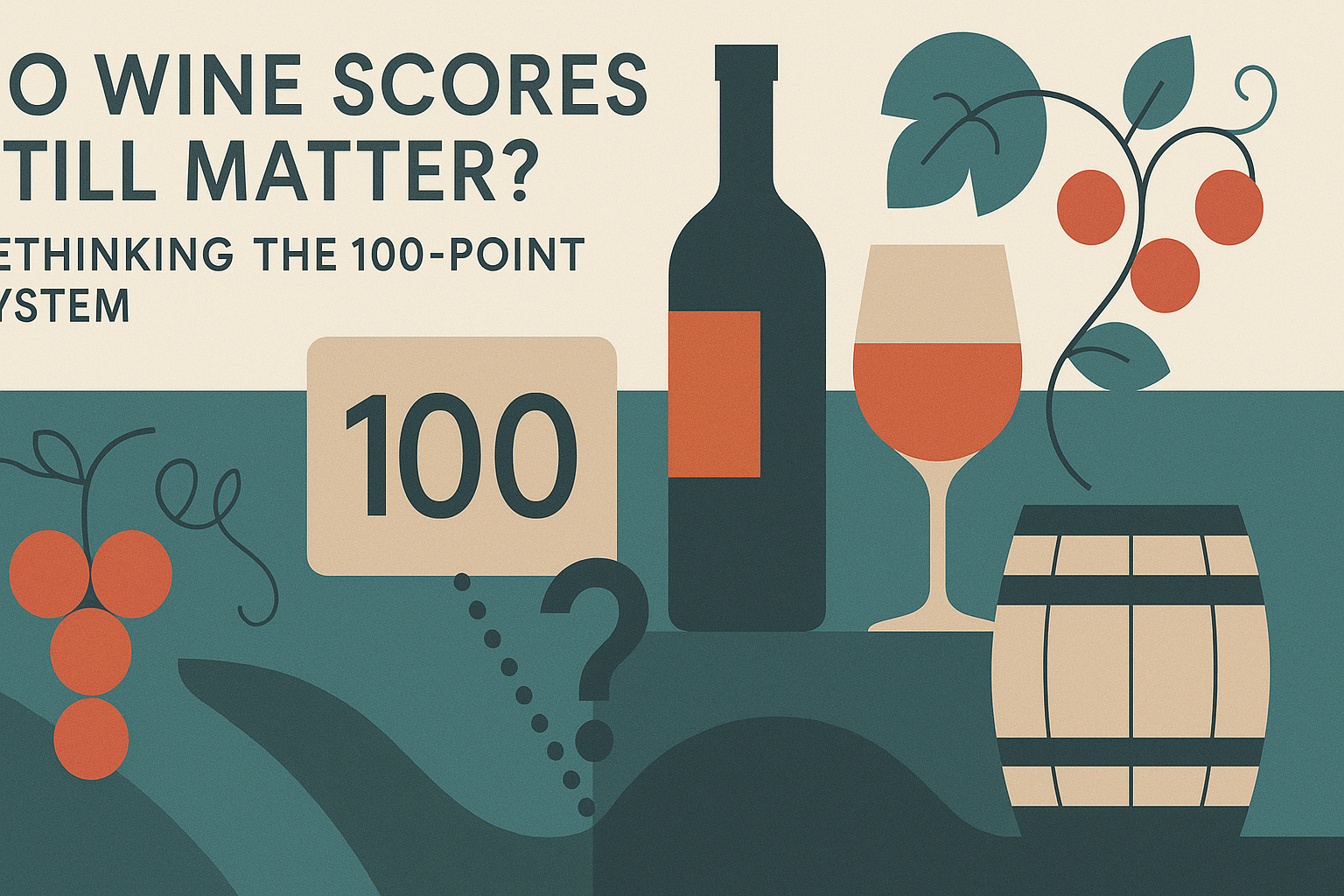

Do Wine Scores Still Matter? Rethinking the 100-Point System
If you’ve ever grabbed a 92-pointer from a supermarket shelf and hoped for magic, you’re not alone. Scores are the cheat codes of wine shopping—fast, tidy, and sometimes wildly imperfect. In a smart, timely piece for Wine-Searcher, Konstantin Baum MW revisits the 100-point system’s grip on the market and asks the question we should all be asking: does a number still move the needle?
Why This Matters
The wine world moves fast, and this story captures a pivotal moment. Whether you’re a casual sipper or a dedicated collector, understanding these shifts helps you make smarter choices about what ends up in your glass.
Key Takeaways
- Key themes: wine scores, 100-point system, wine buying tips—stay informed on these evolving trends.
- The takeaway? Keep exploring, keep tasting, and don’t be afraid to try something new.
Style snapshot: what scores say (and what they don’t)
Scores compress a thousand variables into one digit. Helpful? Often. Complete? Not even close. They nod at quality but are mute on who will actually enjoy the bottle.
- Grape variety: Knowing the grape helps more than a single score. Cabernet Sauvignon typically brings firmer tannins and fuller body; Pinot Noir leans lighter-bodied with red fruit and earth.
- Region/appellation: Napa Valley Cabernet reads differently than Left Bank Bordeaux; a Rioja Blanco (often Viura-led) is a different dry, oak-influenced animal than, say, a zesty Albariño from Rías Baixas.
- Style descriptors: Dry vs. sweet, body, acidity, tannin—these steer pairings and occasions. Scores rarely convey those essentials clearly.
Baum captures the double-edged sword perfectly: “Scores offer clarity and confidence,” he writes, then shows how that clarity can distort behavior. As he notes, “Trust has not disappeared; it has dispersed.” (Wine-Searcher, Konstantin Baum MW)
Why the 100-point scale rose—and how it’s changing
Let’s give credit where it’s due. In a world where wine can feel like grad school with corks, a one-number signal became retail rocket fuel. It helped busy shoppers, empowered retailers online, and—yes—minted legends via the Parker effect. As Baum explains, numerical differences as small as 94 vs. 95 can move inventory and pricing, especially for fine wine and auctions.
But the ground has shifted. Younger drinkers surf multiple currents—somm recs, friends, social feeds, sustainability cues—and don’t chain their decisions to a single critic. That doesn’t mean scores are dead. They’re just less sovereign. Baum even shares a case where his 98-point rating on a 2017 Alonso & Pedrajo Suane Rioja Blanco Reserva sparked massive click-throughs and a global sellout. Attention still follows big numbers; it’s just part of a wider signal mix now.
On the flip side, we’ve all seen “grade inflation” creep in—magazines or self-styled critics whose scales magically start at 95. That’s where trust frays. A score without context (grape, region, style, values) can be more sizzle than steak.
How to shop smarter than a number
I’m not here to burn the 100-point system at the stake. Use it—just don’t outsource your palate to it.
- Start with style, not score: If you like full-bodied, structured reds, a Napa Valley Cabernet Sauvignon (dry, full-bodied, firm tannin) might be your lane—score or no score. Prefer lighter, savory reds? A Burgundy-style Pinot Noir (dry, light-bodied, bright acidity) could be your north star.
- Read beyond the digit: Look for grape variety, region, and a few descriptors: dry, sweet, body, acidity, tannin. That’s your match-making kit.
- Calibrate to a critic: If a reviewer consistently likes what you like, great—follow their lane. If not, don’t force it.
- Use scores for risk zones: New regions online? A strong score can be a useful initial filter while you learn the terrain.
Baum’s point lands: scores still matter, but they matter differently. The power has migrated from singular authorities to a chorus—critics, peers, and your own taste buds.
Best occasion and pairing direction
Best occasion: When gifting, collecting, or buying unfamiliar regions online, a high score can be a helpful confidence nudge—then verify style before you click.
Best pairing direction: Match structure to the plate. High-acid, oak-kissed Rioja Blanco (commonly Viura, dry, medium to full-bodied) plays beautifully with roast chicken or richer seafood. Plush, dry Napa Cabernet Sauvignon loves grilled steaks and aged cheddar. Delicate, dry Pinot Noir from Burgundy? Think roast salmon or mushrooms. Scores won’t tell you that; style will.
The closing takeaway
Scores are a starting line, not a finish. They’re great for triage, clunky for taste. Baum’s essay reminds us that as trust disperses, the real flex is knowing what you like and why—and using numbers as one signal among many. Keep the scoreboard in view, but let grape, region, and style call the play.
As Baum asks implicitly: are we chasing points, or pleasure? I’ll take the latter—with a side of context.
Short quote for the road: “Trust has not disappeared; it has dispersed.” (Wine-Searcher, Konstantin Baum MW)
Source: https://www.wine-searcher.com/m/2026/01/whats-the-point-of-points?rss=Y