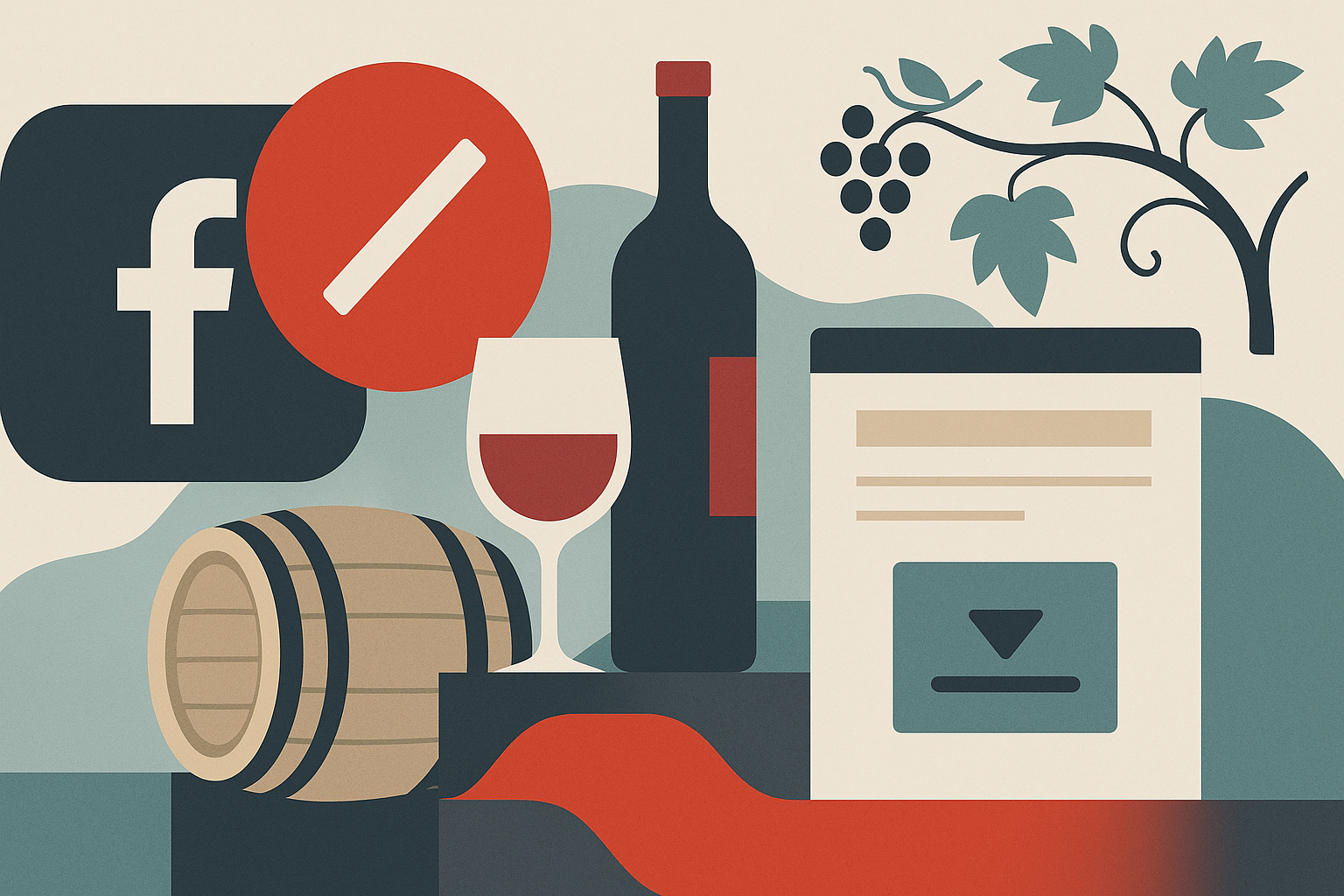

When your biggest megaphone suddenly goes quiet, you notice. On or around January 9th, millions of Facebook business pages—from wineries to wellness coaches—saw their Page Recommendations suspended. If you run a tasting room, manage a club, or sell DTC, that’s the kind of chill you feel right down to the cellar.
Why This Matters
The wine world moves fast, and this story captures a pivotal moment. Whether you’re a casual sipper or a dedicated collector, understanding these shifts helps you make smarter choices about what ends up in your glass.
Key Takeaways
- Key themes: Meta, Facebook, wine industry—stay informed on these evolving trends.
- The takeaway? Keep exploring, keep tasting, and don’t be afraid to try something new.
What happened (and why wine got caught in the net)
Northwest Wine Report’s Sean P. Sullivan details how Facebook notified page owners they hadn’t followed Community Standards, then showed those same pages as “in good standing.” Meanwhile, the crucial “Page Recommendations” switch flipped to “Suspended.” Confusing? Absolutely. Damaging? Potentially.
As Sullivan notes, many impacted sectors include wine, beer, and spirits—plus health, beauty, gaming, sports, and non-profits. The scope is global. One verified user reportedly heard “millions” of pages were affected.
“It’s left businesses, many of which spend substantial amounts of money advertising on its platform, twisting in the wind.”
—Sean P. Sullivan, Northwest Wine Report
For wineries, Page Recommendations matter. They are the “you might also like” breadcrumbs that lead casual scrollers to your estate, club signup, or event. Lose that, and growth gets harder—especially for small brands that rely on organic discovery.
Interpreting the silence: algorithmic tightening, human frustration
Meta hasn’t publicly explained the change. Sullivan’s read is pragmatic: no hard pivot on alcohol content policies, more likely an algorithmic attempt to tighten how age-restricted content is handled—one that yanked recommendations for countless pages. The good news? Some pages have since been restored, including Northwest Wine Report’s. The bad news? Most haven’t.
“Overall, what’s going on with this issue? It’s unclear at present.”
—Sean P. Sullivan, Northwest Wine Report
Translation: it’s probably a tech clean-up, but it’s messy. And when you build business on platforms you don’t own, you live with their mess.
Why this matters for wineries and wine-adjacent businesses
In wine, discovery is oxygen. We count on social algorithms to surface our new releases, club perks, and Sunday music on the patio. But platforms are rented land, not freehold. Sullivan’s core advice is the one most marketers preach but few prioritize until there’s a blowout: diversify and own your channels.
Here’s how to turn this hiccup into a healthier long-term plan:
- Own your audience: Build and nurture your email list. Offer value—early access, vineyard notes, behind-the-scenes—and send consistently.
- Make your site a destination: Fast, mobile-friendly, with clear paths to shop, book, and subscribe. Think fewer clicks, more conversion.
- Spread risk across platforms: Instagram, YouTube, TikTok, Pinterest, LinkedIn—each reaches different audiences. Don’t depend on one tide to bring every swell.
- Dial in age-gating and compliance: Ensure your site and social clearly address age restrictions. Clean up keywords and settings that could trigger automated filters.
- Lean into Google: Keep your Business Profile updated (hours, events, images), and post weekly. It’s surprisingly influential for tasting room traffic.
- Track what matters: Use UTM links and basic analytics to see which channels actually move revenue, not just likes.
Short-term triage while Meta figures it out
If your page is suspended from recommendations, do the boring-but-essential hygiene:
- Review Facebook’s Community Standards and your page content. Remove anything borderline.
- Check business category, age restrictions, and admin roles. Keep it clean and consistent.
- Submit a review if possible, and document everything. Screenshots beat memory.
- Redirect discovery: Run a small cross-platform campaign (email + Instagram + Google posts) to maintain momentum while recommendations are down.
Bottom line
Meta’s communication blackout isn’t a good look. Or as Sullivan puts it, PR 101 would’ve been “We’re aware of the issue.” But whether this was an algorithmic tightening or a temporary storm surge, the lesson is durable: don’t build your house on shifting sand. Build where you control the ground.
If you’re in the wine business, treat Facebook and Instagram as useful channels—not single points of failure. The brands that ride out platform shocks are the ones with a steady email cadence, a high-performing website, and a diversified social footprint. That’s not panic—that’s just good cellar management.
Original author: Sean P. Sullivan
Source site: Northwest Wine Report