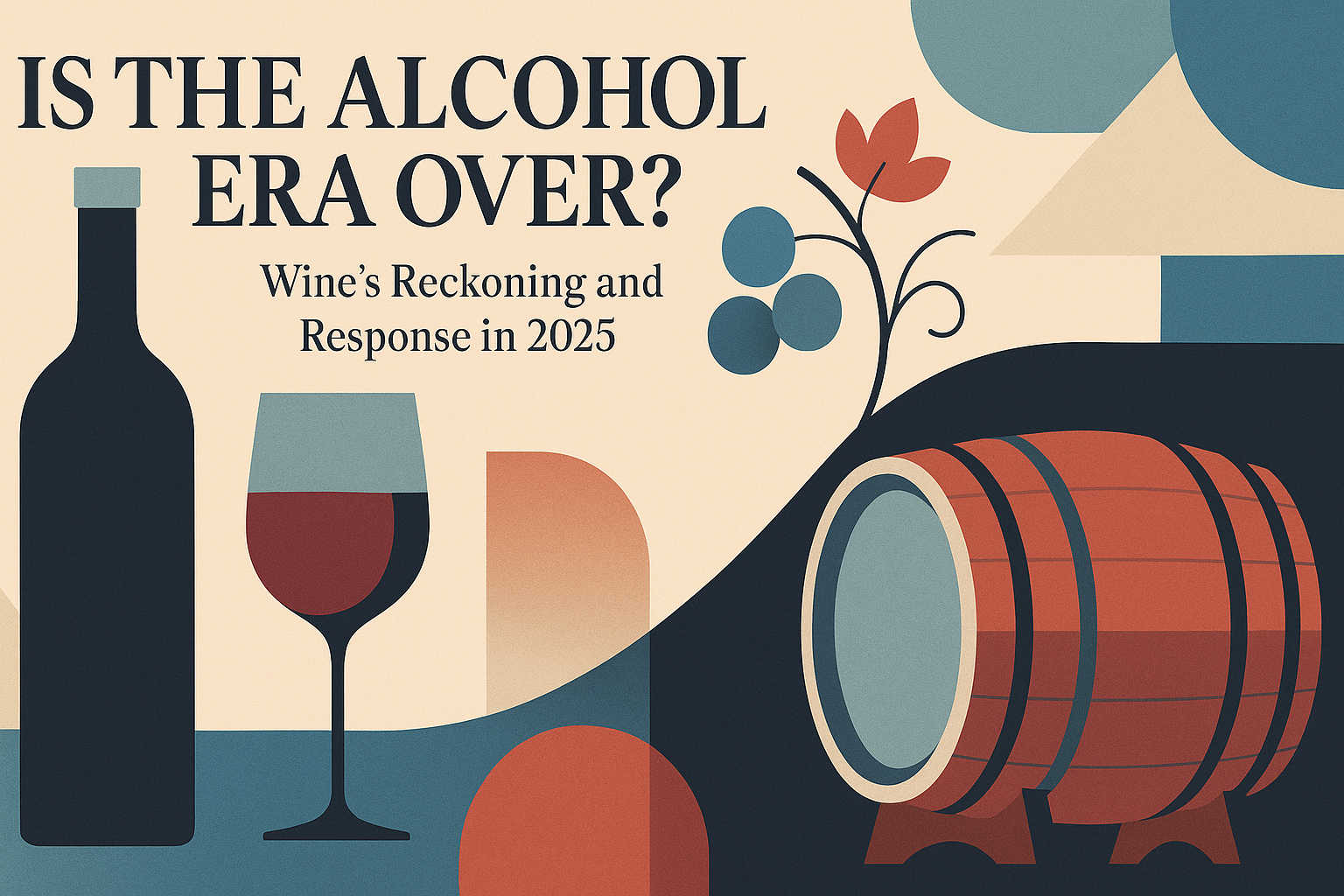

Is the Alcohol Era Over? Wine’s Reckoning and Response in 2025
If you’ve felt the mood around wine shifting from celebratory to side-eye, you’re not alone. In his piece “World of Nothing: A Wine Free Future,” Simon J Woolf at The Morning Claret lays out a stark reality: public health messaging and wellness culture are converging in a way that treats all alcohol as equally suspect. As he puts it, “the anti-alcohol lobby is definitely, positively coming for us.” (Simon J Woolf, The Morning Claret)
Why This Matters
This isn’t just another headline—it’s a signal of where the wine news is headed. Paying attention now could save you money, introduce you to your next favorite bottle, or simply make you the most interesting person at your next dinner party.
Key Takeaways
- Key themes: wine industry trends, WHO guidelines, anti-alcohol messaging—stay informed on these evolving trends.
- The takeaway? Keep exploring, keep tasting, and don’t be afraid to try something new.
Where wine stands right now
Policy is changing fast. The World Health Organisation now states there’s no safe level of alcohol consumption. Canada trimmed guidance to two drinks a week in 2023. In early 2025, the U.S. Surgeon General echoed the WHO line. Meanwhile, cultural cues are shifting: hospital hampers lose their traditional bottle, and China bans alcohol at state events. If you sense the tide going out, you’re not imagining it.
Yet wine isn’t just ethanol in a fancy outfit. It’s a food-adjacent, agricultural product shaped by place—think Cabernet Sauvignon in Napa, Pinot Noir in Burgundy, and dry Riesling in the Mosel. Most table wines are dry, ranging from light and bright to robust and full-bodied. Historically, that nuance has earned wine a social “soft pass.” Today’s messaging flattens nuance into one-size-fits-all risk, lumping a thoughtful glass at dinner with binge drinking.
What the anti-alcohol wave means for wine
Woolf’s point isn’t panic—it’s perspective. He’s acknowledging a reality many in wine tried to shrug off: the ground rules are changing. When wellness narratives flip the script from moderation to abstinence-only, categories like wine—the ones built on culture, cuisine, and community—get caught in the crossfire. The result? Public institutions avoid even the appearance of endorsement, and consumers feel moralized for their choices.
Here’s the rub: the more we ignore this shift, the less say we have in shaping it. Wine’s best case isn’t denial—it’s differentiation. Context matters. A dry, medium-bodied Syrah paired with dinner is a different behavioral pattern from high-proof spirits in rapid succession. That doesn’t mean wine gets a health halo. It does mean we re-center wine as a considered choice: agricultural, culinary, and communal.
Style snapshot
- Grapes and regions: Classic examples include Cabernet Sauvignon (Napa Valley), Pinot Noir (Burgundy), and Chardonnay (Chablis).
- Core styles: Predominantly dry, from light-bodied reds and crisp whites to fuller, oak-influenced styles.
- Occasion fit: More dining room than dance floor—wine’s lane is food-first and conversation-friendly.
Context—beyond the headlines
Common knowledge says wine is about terroir, tradition, and the table. Woolf contrasts that with today’s absolutist messaging, where nuance becomes a liability. He also flags how institutions and leaders shape public perception through symbolic choices—like removing wine from gifts or banning it from official functions. Add economic pressures and sliding global consumption, and you’ve got a perfect storm.
So what’s a producer, sommelier, or casual drinker to do? Own the narrative:
– Emphasize food pairing and moderation, not novelty pours or bravado pours.
– Highlight agriculture and place: vineyards, growers, sustainability practices.
– Keep transparency high: alcohol levels, farming methods, and responsible service are part of modern hospitality.
None of this guarantees a regulatory cuddle. But it does make wine easier to defend as culture, not just consumption. And for those of us in California, where we watch both the swell and the market, it’s about reading conditions honestly and paddling accordingly.
Best occasion and pairing direction
Best occasion: A thoughtful dinner with friends—slow food, slower pours, full conversation.
Best pairing direction: Keep it simple and savory. Grilled fish with a crisp, dry white; roasted vegetables with a medium-bodied, dry red. Think balance and intention over excess.
Woolf’s core message is clear-eyed, not alarmist. If the public square is cooling on alcohol, wine needs to show up smarter—culinary context, agricultural credibility, and real moderation. That’s not caving; that’s competing on what wine does best.
“As 2025 draws to a close, it doesn’t feel like the brightest moment for wine.” (Simon J Woolf, The Morning Claret)
And yet, it’s not game over. It’s a hard pivot. If we can shift the conversation from buzz to balance—from empty units to meaningful experiences—wine still has a place at the table.
Source: https://themorningclaret.com/p/the-last-topic-i-wanted-to-write-anti-alcohol-messaging