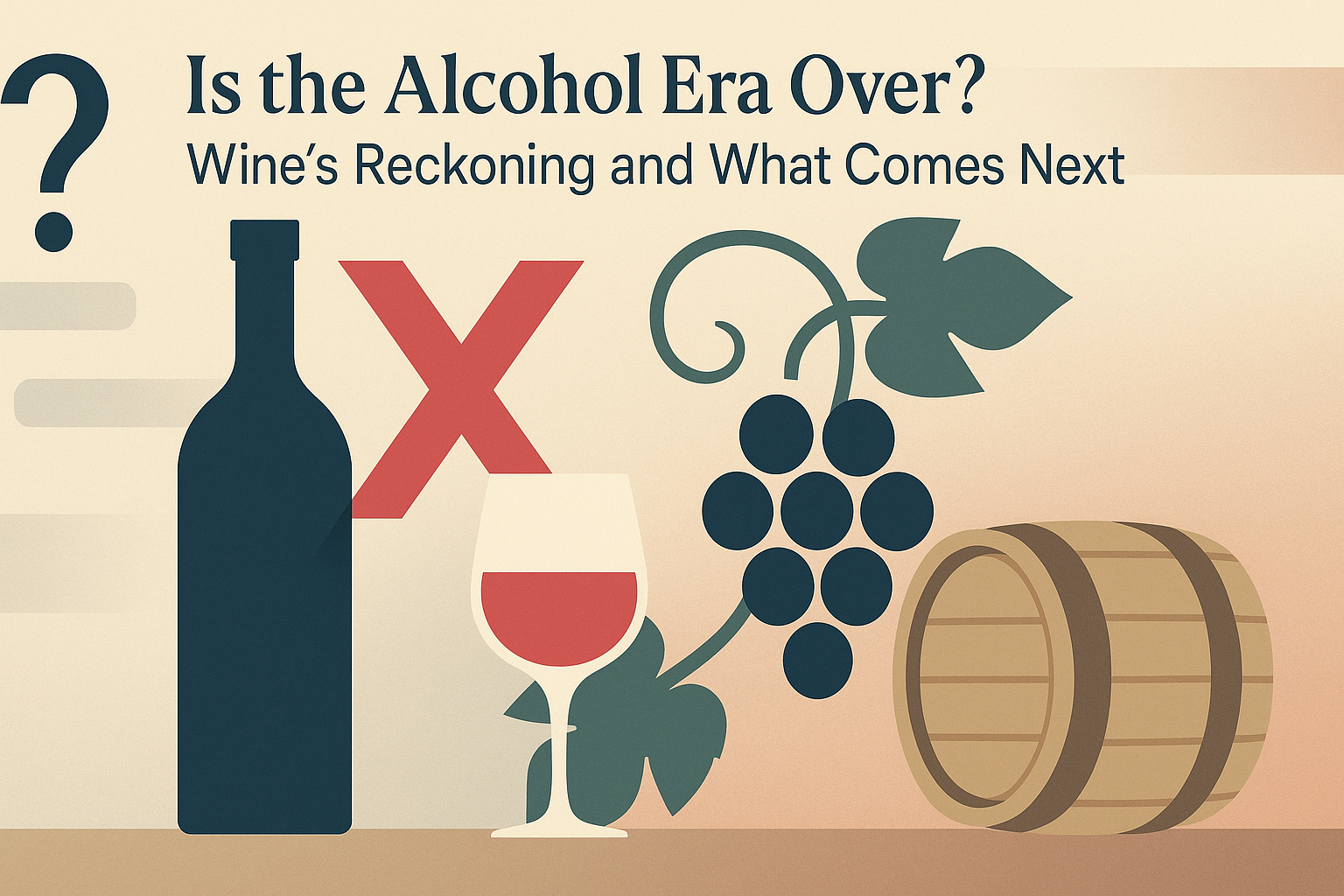

Is the Alcohol Era Over? Wine’s Reckoning and What Comes Next
There’s a chill in the air that isn’t a fog bank rolling over the Pacific—it’s the tone of public health messaging. In his piece “World of Nothing: A Wine Free Future,” Simon J Woolf lays out a sober reality for wine lovers and producers: the mood has shifted, fast. Governments are tightening guidance, cultural norms are rewriting themselves, and the room for nuance is evaporating. As Woolf puts it, “It’s implicitly no longer acceptable for a public body to promote the consumption of alcohol.” (Simon J Woolf, The Morning Claret)
Why This Matters
The wine world moves fast, and this story captures a pivotal moment. Whether you’re a casual sipper or a dedicated collector, understanding these shifts helps you make smarter choices about what ends up in your glass.
That line hits hard, not because it’s dramatic, but because it’s ordinary. A holiday gift basket sans wine isn’t a scandal; it’s a signal. The center is moving.
Key Takeaways
- Key themes: wine industry, anti-alcohol messaging, WHO guidelines—stay informed on these evolving trends.
- The takeaway? Keep exploring, keep tasting, and don’t be afraid to try something new.
The new baseline: zero is safe, moderation is complicated
Woolf maps out the trend lines clearly: the WHO now says there’s no safe level of alcohol consumption. Canada shrank its recommended weekly intake to two drinks. The U.S. Surgeon General echoed the WHO in early 2025. China banned alcohol at state events. This isn’t fringe chatter; it’s policy, posture, and practice.
Wine’s long-standing “special status” was always messy—split studies, Mediterranean diet halos, and a hard-to-quantify cultural role at the table. But the current argument doesn’t really care about the line between a thoughtful glass of Chianti with dinner and a fifth of budget scotch on the sidewalk. As Woolf notes, the temperance narrative “accepts no nuance.” The simplicity is seductive: alcohol equals harm. End of story.
Why nuance still matters (and where wine can stand tall)
What’s being lost in this moment is context. Wine has always thrived in it—shared meals, varied styles, diverse alcohol levels, and an emphasis on flavor and place over intoxication. The vast majority of classic wine regions built their reputations around food-first drinking: dry styles, medium body, and a social cadence that’s about conversation, not consumption. That doesn’t negate the risks of alcohol; it just reminds us there’s a spectrum of behavior and intent.
Here’s where wine can walk the line without shouting down the health conversation:
- Own the culture of the table: In many traditions, wine is an accompaniment, not the main event. Keep it that way.
- Lean into transparency: Labeling, lower-alcohol options, and real talk about serving sizes aren’t threats—they’re tools.
- Champion flavor over buzz: Terroir, grape variety, and craftsmanship are compelling stories that don’t rely on alcohol as the headline.
Woolf isn’t saying the sky is falling; he’s saying the weather is changing. If you surf, you don’t argue with a swell—you read it and adapt.
Industry reality check: decline meets identity crisis
Sales are down, consumption is down, economies are wobbly, and “the alcohol era is over,” as Woolf quotes Derek Thompson. That’s not just a demand problem; it’s a story problem. If wine is framed primarily as alcohol, it loses its best defense—its sensorial and cultural richness. If wine tells its story in terms of place, people, and moderation by design, it’s speaking the language of 2025, not 2005.
Practically, that means fewer bro-y tasting rooms and more welcoming hospitality. Less hard sell, more education. Fewer “top-up?” pours, more mindful pacing. It also means embracing nonalcoholic companions at the table without treating them like the junior varsity.
The path forward: calm, honest, and grounded
This isn’t the moment for defensiveness. It’s the moment to be specific: dry versus sweet, light versus full-bodied, sparkling versus still, and how each fits a meal. It’s also the moment to accept that some people will opt out—and still be part of the wine community through food, place, and conversation. Wine culture is bigger than any single glass.
Best occasion: a slow dinner with friends where flavor and talk outpace the pour.
Best pairing direction: keep it classic—dry, medium-bodied styles alongside simply prepared food. Think balance first, showmanship second.
Woolf’s piece is a nudge to drop the denial and pick up the nuance. Wine doesn’t need to fight health guidance to remain meaningful. It needs to embrace its strengths—craft, culture, and context—and let go of habits that never served it well. The future might be drier, literally and figuratively. But a glass of wine, thoughtfully made and mindfully enjoyed, still has a place at the table.
“It’s implicitly no longer acceptable for a public body to promote the consumption of alcohol.” — Simon J Woolf, The Morning Claret
Source: https://themorningclaret.com/p/the-last-topic-i-wanted-to-write-anti-alcohol-messaging