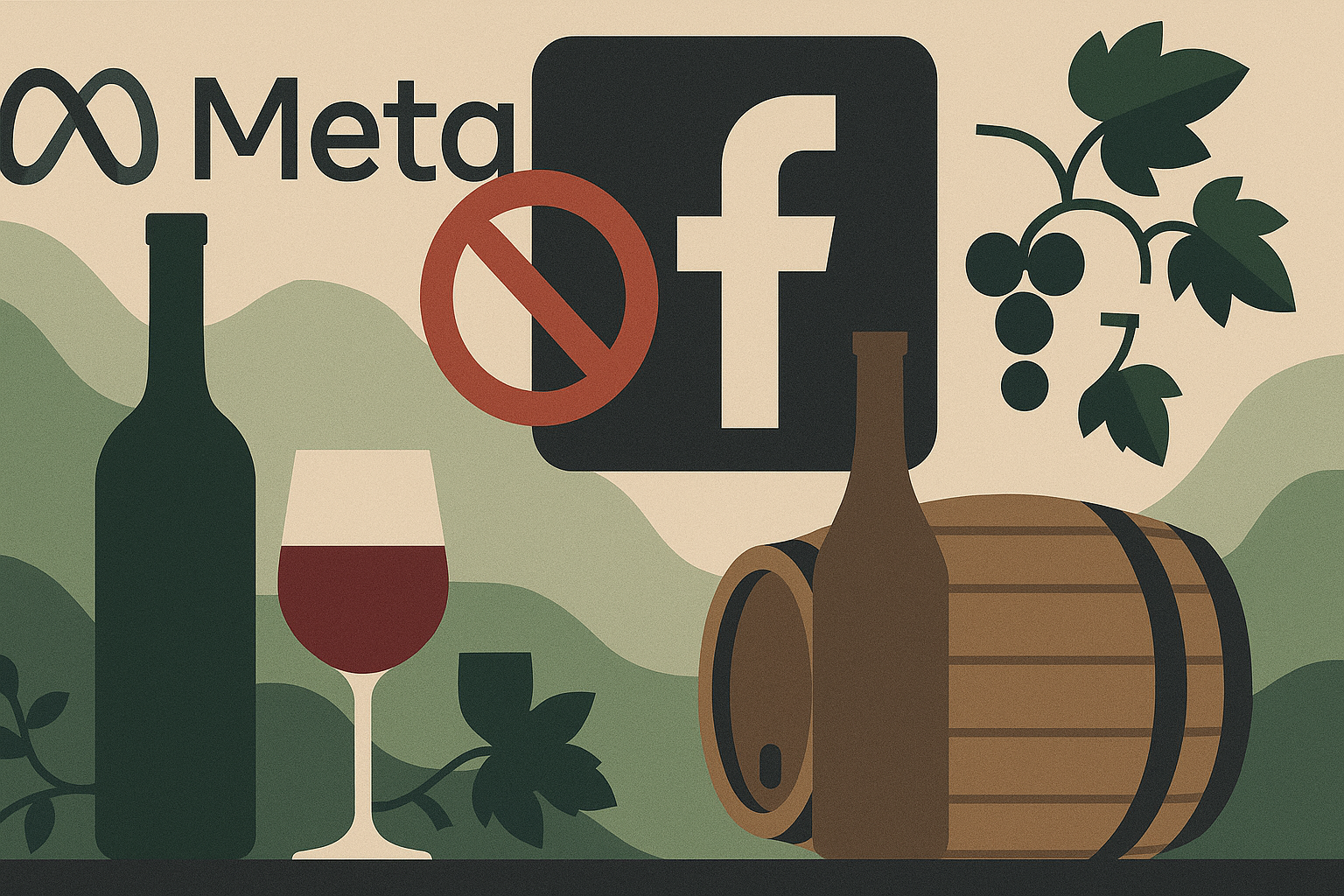

If your winery’s Facebook growth flatlined recently, you’re not imagining things. On or around January 9, Meta quietly suspended page recommendations for “millions” of business pages—wine, beer, and spirits felt it hard, but the ripple reached far beyond beverage. For wineries that treat Facebook as a lifeline to club members and tasting room regulars, this kind of platform wobble is the definition of not chill.
Why This Matters
This isn’t just another headline—it’s a signal of where the wine news is headed. Paying attention now could save you money, introduce you to your next favorite bottle, or simply make you the most interesting person at your next dinner party.
Key Takeaways
- Key themes: Meta, Facebook, wine marketing—stay informed on these evolving trends.
- The takeaway? Keep exploring, keep tasting, and don’t be afraid to try something new.
Snapshot: what changed and who it hit
Page recommendations—Facebook’s “Here’s a page you might like”—are a major discovery engine. When they vanish, organic reach shrinks. According to Northwest Wine Report editor Sean P. Sullivan, the messaging from Facebook was muddy: some pages were flagged for violating “Community Standards,” yet showed no actual violations and remained in good standing. Meanwhile, recommendations read “Suspended.”
As Sullivan puts it, “Meta has a serious PR problem.” —Sean P. Sullivan, Northwest Wine Report
His working theory: Facebook tried to algorithmically tighten enforcement around age-restricted content, and the net caught far more pages than intended. Some pages have since been restored—including Northwest Wine Report’s—but many remain stuck in limbo.
Why wine was caught in the crossfire
Wine is age-restricted, and platforms handle that with imperfect filters. When enforcement changes—especially via algorithms—legit businesses can get swept up. The wine industry is uniquely vulnerable because so much brand storytelling (new releases, event invites, club drops) lives on Facebook and Instagram. If discovery gets throttled, tasting rooms feel it.
Sullivan’s take is cautiously optimistic: “Page Recommendations should be restored where appropriate.” —Sean P. Sullivan, Northwest Wine Report. But he also offers the reminder many of us need taped to the cellar door: you don’t own your social pages. One platform tweak can shrink your reach overnight.
What wineries should do now
Short term: sanity check your house, then diversify your playbook.
- Review age-gating and page settings. Confirm your page is restricted to 21+ where applicable and avoid borderline content (promotions can be fine, but keep them compliant).
- Request a review. Yes, it’s clunky—but document the process. Screenshots matter when you escalate.
- Audit content. Remove anything that might trip automated filters: violent imagery, inflammatory language, or anything that could be misread by bots.
- Strengthen owned channels. Email lists, your website, and SMS are safest. Make subscribing irresistible with club perks and early access.
- Spread your social bets. Post to Instagram, Threads, TikTok, YouTube, and Google Business Profiles. Don’t let one algorithm hold your calendar hostage.
- Lean into search. Keep your site’s release pages, event listings, and FAQs updated for SEO so discovery isn’t solely dependent on social.
Best occasion: when you’re mapping your 2026 marketing calendar and want to sleep at night.
Best pairing direction: pair social with owned channels—email + website—so algorithms complement, not control, your growth.
The bigger takeaway for beverage brands
The wine business thrives on consistent storytelling—harvest notes, release drops, behind-the-scenes. Social is the surf break we paddle out to, but it’s not our ocean. If a platform suddenly changes the tide, you need more than one board. Build direct relationships, keep multiple traffic sources flowing, and treat social as rented real estate.
None of this means abandon Facebook or Instagram. It means don’t stack all your grapes in a single basket. As Sullivan writes, “I’m not saying don’t use these platforms. I’m saying don’t have all of your eggs in one basket.” —Sean P. Sullivan, Northwest Wine Report
For now, watch for recommendation status to return, keep your content clean and age-appropriate, and shore up the channels you control. Meta may fix the mess; your job is making sure your brand isn’t dependent on them doing it fast.