
Meta’s Algorithm Chill: Why Wineries Are Feeling It
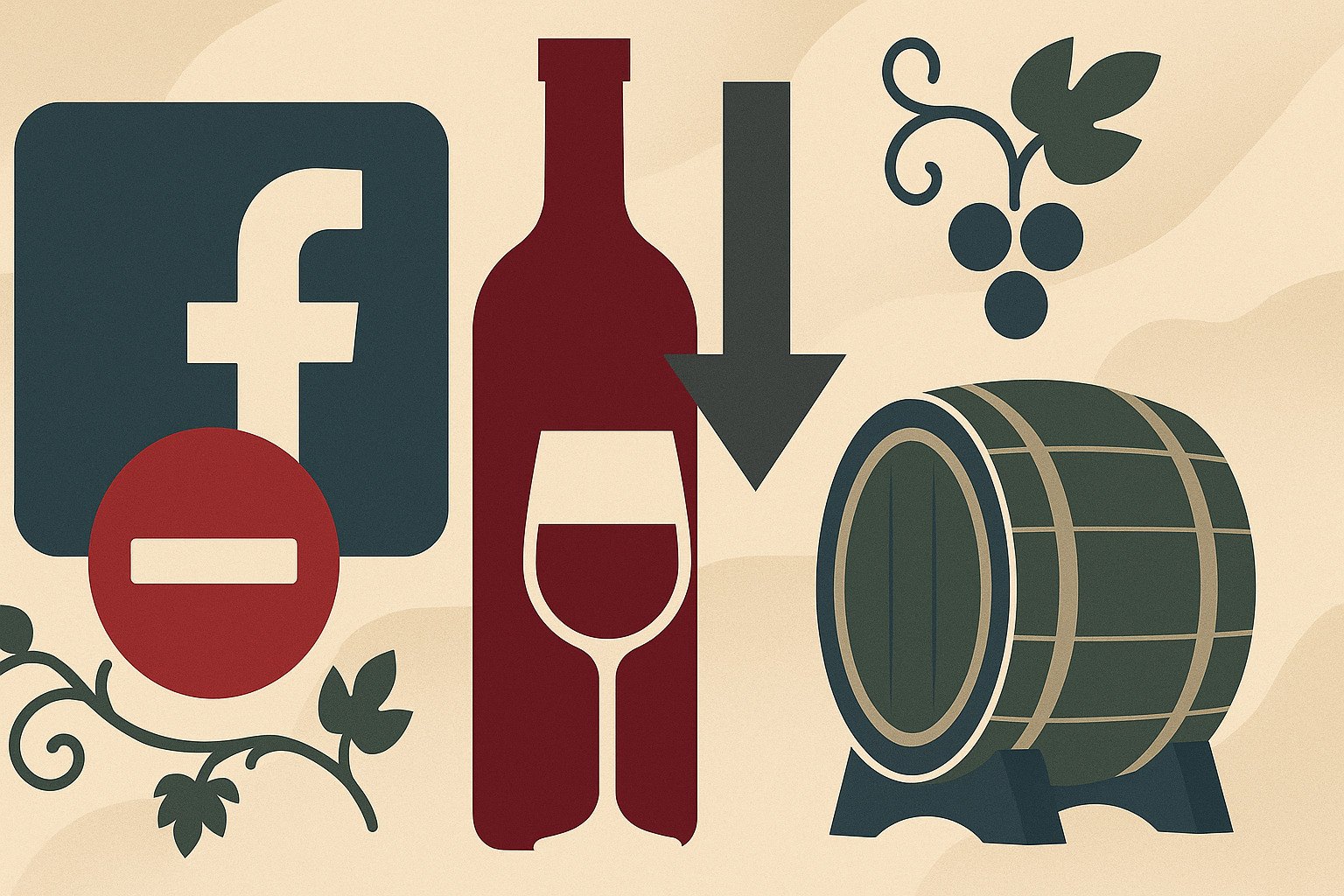
If you woke up last week to a Facebook notice saying your winery page would no longer be recommended, you weren’t alone—and you weren’t imagining things. In a report by Sean P. Sullivan at Northwest Wine Report, Meta appears to have throttled recommendations for pages tied to alcohol, causing an immediate jolt to digital visibility across wine, beer, and spirits.
Why This Matters
This isn’t just another headline—it’s a signal of where the wine news is headed. Paying attention now could save you money, introduce you to your next favorite bottle, or simply make you the most interesting person at your next dinner party.
The change is messy, confusing, and potentially expensive. It may be temporary. It may not. But either way, it’s a wake-up call for wineries that rely on discoverability via Facebook’s algorithm.
Key Takeaways
- Key themes: Meta, Facebook algorithm, wine marketing—stay informed on these evolving trends.
- The takeaway? Keep exploring, keep tasting, and don’t be afraid to try something new.
What Actually Changed—and Why It’s Messy
According to Sullivan, Meta notified page owners that their content didn’t comply with “Community Standards,” yet many affected accounts also saw a status that said, “Good news: no violations to show.” As he quotes from the Facebook notification: “Our technology took action.” —Sean P. Sullivan, Northwest Wine Report
That contradiction—no violations, but restricted recommendations—has folks scrambling. One page owner summed up the user experience: “clicked links, tried to find instructions, nothing.” —Sean P. Sullivan, Northwest Wine Report
Some Meta Verified users were told this stemmed from new regulations around promoting certain products. Sullivan notes he couldn’t confirm that, and Meta’s press office didn’t respond. Meanwhile, Instagram appears unaffected—for now.
Why This Hits Wineries Hard
For wineries, Facebook isn’t just a billboard; it’s a funnel. Recommendations help casual wine drinkers discover tasting rooms, club sign-ups, and event posts without paid boosts. Pull that lever, and organic growth flattens. If this sticks, many businesses will have to pay to reach the same audiences—assuming advertising options for alcohol content remain stable.
That’s a rough ride when the wine industry already faces soft demand, a cash crunch for small producers, rising costs, and distribution headaches. Losing free algorithmic discovery is like paddling out on a day when the swell drops and the wind kicks up—technically doable, but it’s going to take effort.
Practical Moves Wineries Can Make Now
Don’t panic; pivot. If Facebook is going cold on recommendations, diversify your reach and shore up owned channels:
- Email is king: Build lists at the point of sale, in the tasting room, and through gated content on your site. Email is an algorithm-free zone.
- Lean on Instagram: The report notes Instagram doesn’t appear impacted. Use Reels, co-posts with retailers, and UGC campaigns to keep your audience engaged.
- SEO and local search: Refresh your Google Business Profile, update hours and events, and add keyword-rich, human-friendly pages for your tasting room and club.
- Collaborate: Partner with breweries, distilleries, and food trucks on cross-promo content and shared events. Two audiences > one algorithm.
- Own your calendar: If you rely on Facebook for event discovery, mirror every event on your site and newsletter. Add “Add to Calendar” buttons.
- Measure: Watch your site traffic, email growth, and DTC conversions. If Facebook declines, shift budget to channels showing lift.
The Bigger Picture
Meta has a history of algorithm changes that ding business reach. As Sullivan writes, changes were conveyed in a way that felt opaque and “phishing-adjacent,” with links that didn’t lead to a usable review process. And the language—“Our technology took action”—doesn’t inspire confidence that humans are actively steering the ship.
Best case, this is a glitch that gets reversed. Worst case, alcohol-related pages simply stop being recommended. That’s a multi-billion-dollar marketing smackdown, and the ripple would hit small wineries the hardest.
My Take: Build Resilience, Not Dependencies
Platforms giveth, platforms taketh away. The healthiest wineries I work with treat Facebook as rented land and email as home base. If Meta’s norms for alcohol promotion are tightening—whether due to policy shifts or automated enforcement—then a smart portfolio of channels is your best insulation: email, website, search, Instagram, partnerships, and IRL hospitality.
One more note: When you do advertise, aim for content that educates or entertains rather than pure promos. In wine, trust is the currency. Show your vineyards, share harvest stories, demystify styles, and spotlight hospitality. If you must pay to reach people, make the content worth the trip.
Final thought from Sullivan’s piece: “Good news: no violations to show.” —Sean P. Sullivan, Northwest Wine Report. If that’s the system’s idea of good news, we all need a Plan B.
Source: https://www.northwestwinereport.com/2026/01/meta-changes-sow-confusion-concern-in-wine-industry