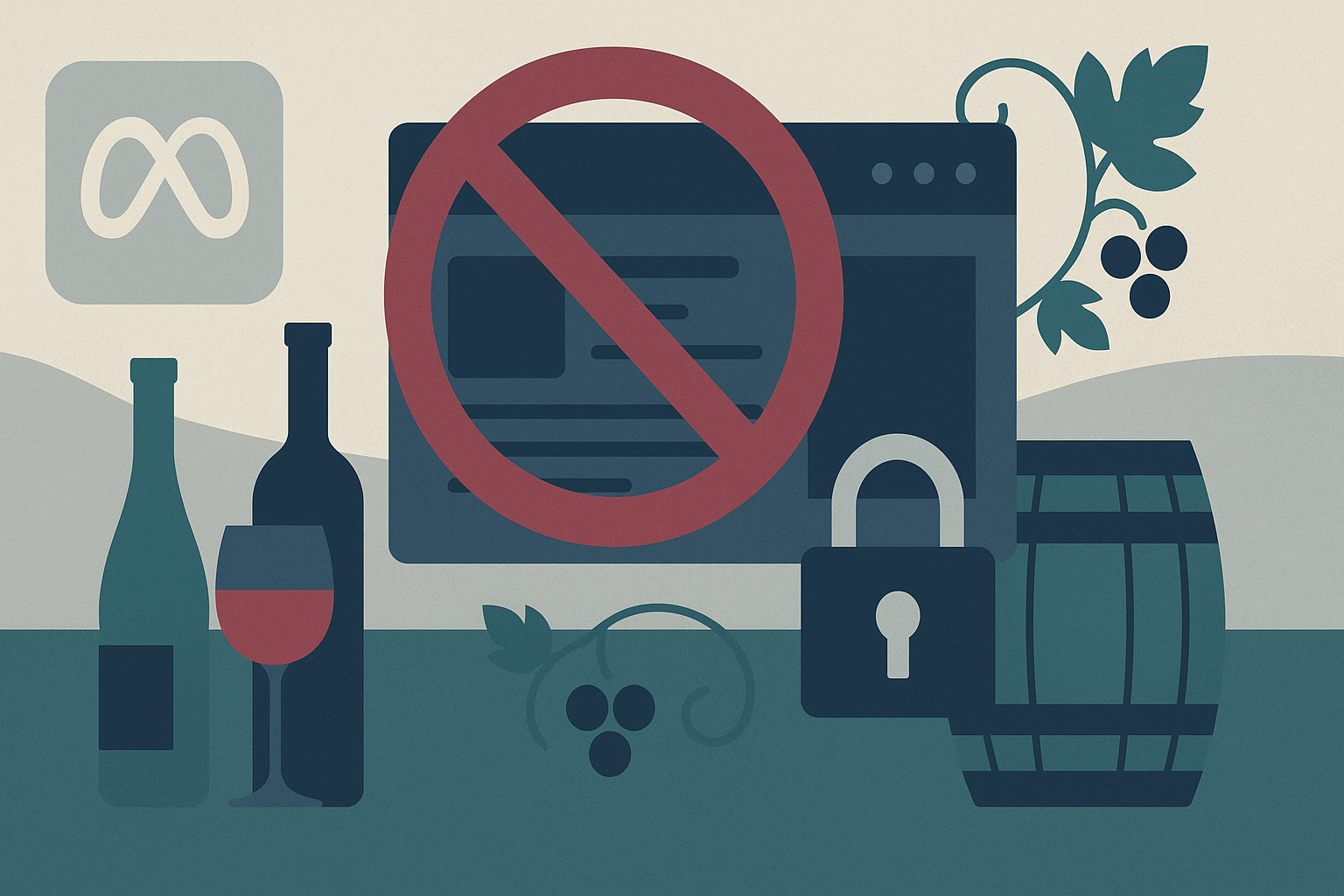

If your winery’s Facebook page suddenly stopped getting recommended this month, you’re not alone — and you’re not imagining things. On or around January 9, Meta’s switch-flip sidelined page recommendations for millions of businesses worldwide. Wine, beer, and spirits pages were disproportionately hit, but hospitality, wellness, gaming, sports, and even non-profits felt the tremor too. The unsettling part? Meta’s radio silence.
Key Takeaways
- Key themes: Facebook, Meta, wine industry—stay informed on these evolving trends.
- The takeaway? Keep exploring, keep tasting, and don’t be afraid to try something new.
Why This Matters
Behind every great bottle is a story, and this one matters. It reflects broader trends shaping how wine is made, sold, and enjoyed. Stay curious—your palate will thank you.
As Northwest Wine Report’s Sean P. Sullivan put it, “Meta has a serious PR problem.” —Sean P. Sullivan, Northwest Wine Report. That line hits harder than a zin at 15.5%: when a platform becomes mission critical for small businesses and tasting rooms, transparency isn’t optional — it’s oxygen.
“What’s going on with this issue? It’s unclear.
Why this matters for wineries
Page recommendations are a major discovery funnel. They’re where Facebook suggests, essentially, “Here’s a page you might like.” —Sean P. Sullivan, Northwest Wine Report. When that faucet closes, follower growth slows and organic reach flattens. For wineries, that can ripple into fewer event RSVPs, lower DTC sales, and less tasting room traffic. It’s not just inconvenient; it’s revenue-adjacent.
To add to the confusion, many affected pages showed no violations and stayed in “good standing,” while recommendations were listed as “Suspended.” Meta suggested owners could request a review, but without a cited violation, finding the right form felt like hiking a switchback in flip-flops.
What’s (probably) happening
Sullivan’s best-guess — and it reads as plausible — is that Meta tightened algorithms around age-restricted content, then accidentally clipped far more pages than intended. “What’s going on with this issue? It’s unclear.” —Sean P. Sullivan, Northwest Wine Report. Some pages have since been restored (including Northwest Wine Report’s), but many are still in limbo. If this is algorithmic housekeeping, it may sort itself out over time. But algorithms aren’t sommeliers; they don’t always get nuance.
For wine folks, age-gating is table stakes. If you operate in alcohol, double-check your page settings, age restrictions, and the basics: accurate business categories, location info, and adherence to community standards. That’s not a cure-all, but it keeps you out of the obvious tripwires.
Smart moves now (so your digital house stands up to swells)
- Own your audience: Put more weight behind your website, newsletter signups, and SMS (opt-in, of course). Platforms can change the rules mid-vintage; your list is yours.
- Diversify channels: In addition to Instagram, consider YouTube Shorts, TikTok (with proper age gating), and Google Business Profile updates. Spread the risk.
- Audit Facebook: Confirm age restrictions, business category, admin roles, and recent posts for anything that could trip automated filters (e.g., violence, hate, explicit language).
- Strengthen search: Keep hours, menus, and event info current on your site. If social recs dip, SEO and direct traffic can carry the load.
- Measure what matters: Track email CTR, direct site visits, and sales tied to campaigns. If Facebook goes flaky, you’ll know where to pull levers elsewhere.
Industry context
Wine marketing’s best practice hasn’t changed: build a brand on platforms you control, then let social amplify it. Meta’s silence is a reminder that rented land can be repossessed. Especially for age-restricted categories, being disciplined with compliance (age gates, audience targeting, and content safety) is part of modern hospitality.
There’s also a culture piece here. The wine industry favors style, storytelling, and community — all of which make social platforms powerful. But the wise play is to stack your foundation under that story. When the algorithm tide goes out, you want more than footprints left in the sand.
The bottom line
Don’t panic, do plan. Keep posting quality content, tidy up your settings, and broaden your marketing mix. If recommendations bounce back, great. If they don’t, you’re already building resilience. Meta may eventually explain what happened; until then, take the hint, not the hit.