
If you care about wine, you should care about weather. In the Pacific Northwest, Mother Nature is basically the head winemaker, and she just dropped some pretty telling hints about what’s ahead for the 2026 growing season. Operational meteorologist and travel writer Michael Fagin—guesting on Northwest Wine Report—takes stock of fall conditions in the Columbia Valley and Willamette Valley, plus an early peek at winter and snowpack.
Key Takeaways
- Key themes: Pacific Northwest, Columbia Valley, Willamette Valley—stay informed on these evolving trends.
- The takeaway? Keep exploring, keep tasting, and don’t be afraid to try something new.
Why This Matters
Behind every great bottle is a story, and this one matters. It reflects broader trends shaping how wine is made, sold, and enjoyed. Stay curious—your palate will thank you.
First up: temperatures. Richland, Washington and Salem, Oregon tracked a similar pattern from mid-October through early January—mostly average through October and November, a warm pop in early December, then a cool-down to close out the year. As Fagin notes for Richland, “Then, early December experienced well above average temperatures, with some record high temperatures.” (Northwest Wine Report). In the Willamette, Salem saw “above average temperatures and near record temperatures at times” before settling back toward normal late December.
What does that mean in the vineyard? The fall’s largely average temps favored orderly vine dormancy—no chaotic rush into winter sleep, no sudden shock to hardiness. That early-December heat spike is the wildcard: warmth can slightly nudge metabolic activity, potentially affecting how vines allocate carbohydrates and how quickly they deepen dormancy. It’s not inherently bad, but it’s a note growers keep in the back pocket when planning pruning schedules and monitoring cold hardiness. The late-December cool-down helped reset the deck, reinforcing dormancy heading into the heart of winter.
Precipitation tells the other half of the story. For Washington’s Columbia Basin, Fagin writes: “Precipitation for Richland since mid-October has been above average.” (Northwest Wine Report). That’s good news for soil moisture profiles and early-season recharge, especially in vineyards that run a little dry post-harvest. In a region where irrigation is standard practice, winter inputs matter—less spring stress and more flexibility when the canopy starts to push.
Oregon’s Willamette Valley leans more heavily on rainfall than irrigation, so staying near seasonal norms through fall means a cleaner handoff into winter. Combined with the temperature arc—average, warm blip, then average—it points toward a healthy set-up for disease management and vine recovery, provided we don’t see any prolonged, extreme cold snaps.
Fagin also looks at short-term forecasts, the broader winter outlook, and the current snowpack—critical for growers upstream of mountain-fed systems. Snowpack isn’t sexy to talk about unless you ski or farm, but it’s the quiet reservoir that feeds rivers and irrigation allotments when summer heat hits. Lower snowpack can tighten water budgets; ample snowpack gives growers breathing room and, frankly, better odds for precision canopy management during heat events. Even for Willamette growers who don’t depend on big irrigation, snowpack shapes regional water availability and ripples into environmental stress factors.
So how should vineyard managers and wine lovers process all this?
- Dormancy and hardiness: The mostly average fall helped vines settle into winter. That warm early-December pulse is a footnote, not a headline—worth monitoring but hardly doom-and-gloom.
- Soil moisture and recharge: Above-average precipitation in parts of Washington improves early-season soil conditions, a plus for spring growth and irrigation planning.
- Snowpack watch: It’s the long game. Snowpack influences water supply efficiency and vineyard resilience when summer turns up the heat.
- Vintage timing: If late winter stays reasonable—no extended polar punishment—expect a measured start to the season. The vines don’t need drama; they need consistency.
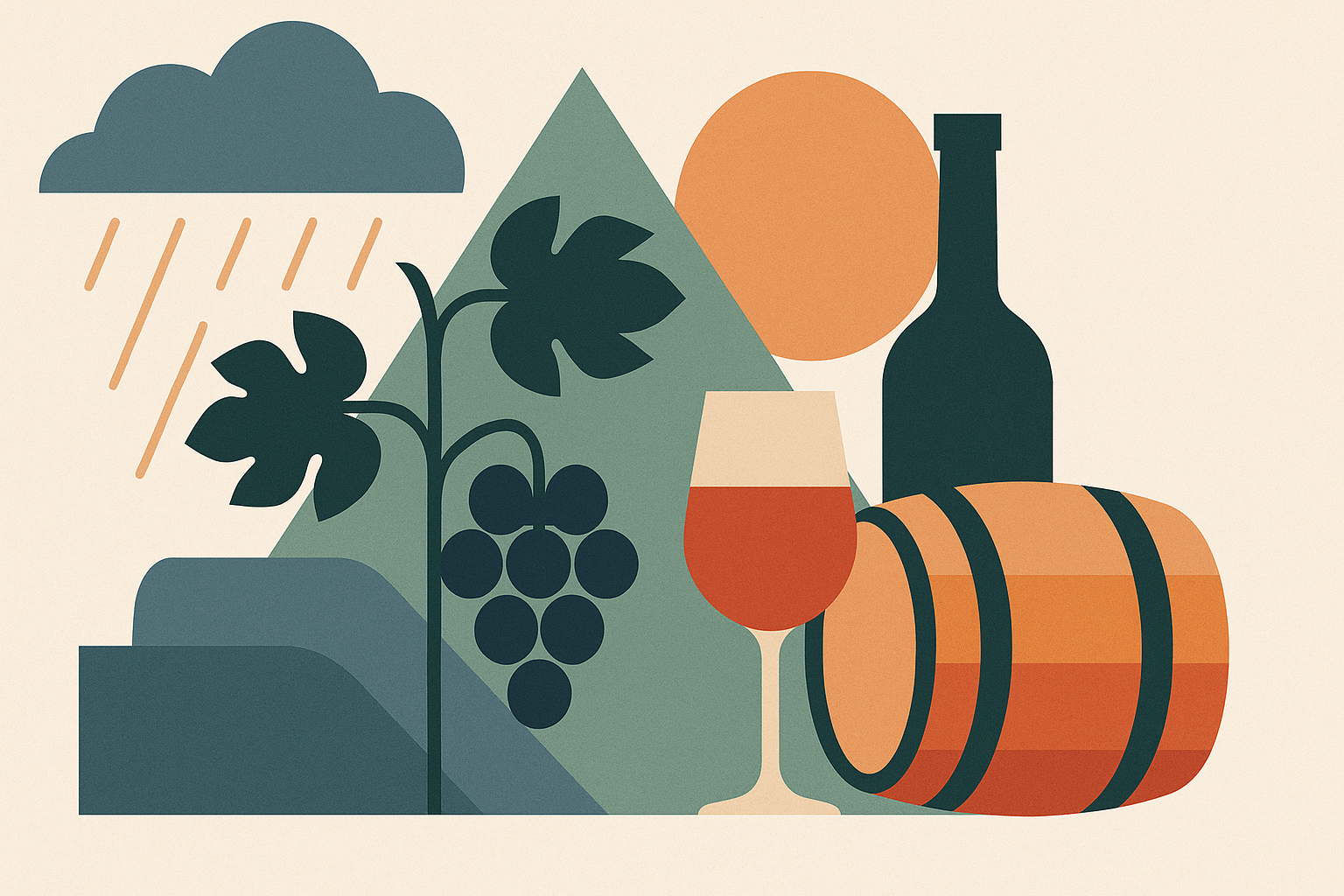
This is where terroir meets meteorology. The Columbia Valley’s continental feel makes it more sensitive to water management and heat spikes; the Willamette Valley’s maritime influence gives it a different rhythm, with rainfall patterns and disease pressure playing bigger roles. Both benefit from orderly winters that set up clean bud break and a sane spring.
To be clear, this isn’t a forecast-forced fortune-telling session. It’s a practical read on recent trends and why they matter. Fagin’s breakdown of temperature and precipitation—plus the nod to snowpack—helps growers and wine geeks connect the dots without panic. As he explains the temperature visuals: “The dark blue bars… represent observations, while the brown colors indicate the average temperature range.” (Northwest Wine Report). Translation: the recent ride has been bumpy at times, but mostly within the guardrails.
Bottom line: steady fall conditions, a brief early-December heat flare, and decent precipitation in parts of Washington offer a constructive backdrop heading into winter. Keep an eye on the mountains—snowpack will quietly set the tone for water availability and vineyard flexibility. And if you’re planning cellar restocks, remember that great vintages often start with calm, competent winters. No need to stress; just stay tuned.