
Keeping a Family Legacy Alive at Château Beauséjour
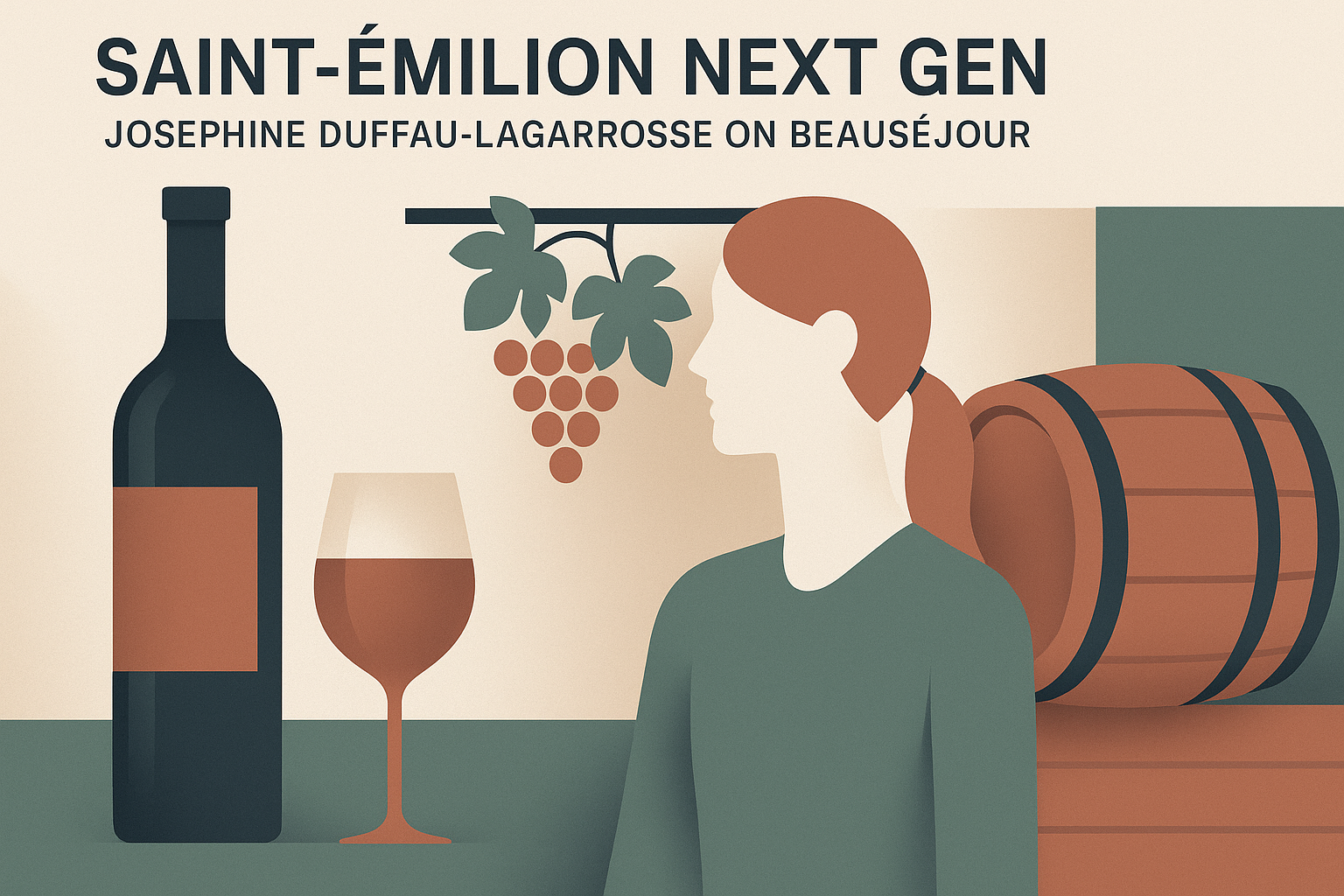
If you care about Bordeaux’s Right Bank—and the future of legacy estates—tune your ears to Jane Anson’s latest episode featuring Josephine Duffau-Lagarrosse of Château Beauséjour (Saint-Émilion). As Wine-Searcher tees it up: “Step inside the world of Château Beauséjour with Josephine Duffau-Lagarrosse,” a ninth-generation winemaker actively rewriting what tradition looks like today. (Wine-Searcher)
Why This Matters
The wine world moves fast, and this story captures a pivotal moment. Whether you’re a casual sipper or a dedicated collector, understanding these shifts helps you make smarter choices about what ends up in your glass.
The episode’s premise is catnip for anyone who’s ever loved limestone, Merlot, or a good comeback story. Duffau-Lagarrosse talks about fighting to retain her family’s stake, navigating real-deal boardroom-and-dining-room drama, and partnering with Prisca Courtin-Clarins. It’s a blueprint for how small-scale estates can go big—without losing their soul—especially when the playbook includes a refreshed consulting team and a collector-first mindset.
Key Takeaways
- Key themes: Bordeaux, Saint-Émilion, Château Beauséjour—stay informed on these evolving trends.
- The takeaway? Keep exploring, keep tasting, and don’t be afraid to try something new.
Style Snapshot: Right Bank roots, limestone lift
Château Beauséjour sits in Saint-Émilion, the Right Bank stronghold where Merlot and Cabernet Franc do their best work. Expect a dry, medium-to-full-bodied Bordeaux blend with the kind of chalky tension only a limestone plateau can throw off. Common wisdom says Beauséjour is built for the long game: ripe-but-controlled fruit, fine tannins, a cool mineral line, and ageability that rewards patience.
- Grape varieties: Merlot-led, with Cabernet Franc as the co-pilot
- Region/appellation: Saint-Émilion, Bordeaux (Right Bank)
- Style: Dry, structured, cellar-worthy; elegance over excess
What’s new here isn’t the geology—it’s the leadership lens. According to Wine-Searcher, Duffau-Lagarrosse has paired global experience with grit, made “bold moves during Covid,” and is targeting a wine “that collectors seek out.” (Wine-Searcher) Translation: a classic estate aiming to feel both timeless and incredibly current. That’s a fine needle to thread—like sticking a perfect bottom turn on a double-overhead set without gouging the rail.
Context: Legacy, leverage, and a modern Saint-Émilion stance
Saint-Émilion’s history can feel heavy—glorious, but heavy. The safe road is to lean into tradition and call it a day. Duffau-Lagarrosse is taking the harder route: protect the heritage, but sharpen the edges. The partnership with Prisca Courtin-Clarins signals long-term capital and brand discipline; the new consulting team suggests cellar and vineyard decisions geared toward clarity and longevity.
That dovetails with where Right Bank quality is trending—less extract-for-extract’s-sake, more precision, lift, and terroir shape. The best modern Saint-Émilion wines feel more architectural than muscular. If Beauséjour keeps riding that curve, expect more focus on vineyard expression and tannin finesse than blockbuster density.
The episode also digs into the human part—family dynamics, stakeholding, and the pressure of steering a name that’s older than most wine encyclopedias. Wine-Searcher hints at candid storytelling: “Get ready for honest stories, big ambitions, and an inspiring vision for the future of Bordeaux.” (Wine-Searcher) That matters because leadership philosophy shows up in the glass. Conviction and restraint are as much choices as they are flavors.
Buyer’s mindset: Who should be paying attention?
If you collect Bordeaux and track estates during inflection points, this is prime time to watch Beauséjour. Change management at a grand cru-classic property is rarely cosmetic—viticulture, picking windows, oak cadence, and blending decisions inevitably shift the profile. The goal, as stated, is to be on collectors’ shortlists; that typically means clarity of identity across vintages, not just one headline year.
For drinkers who love Merlot-Cab Franc blends with verve—the kind that pair roasted plum and graphite with limestone bite—this could be your frequency. Expect an emphasis on freshness and detail rather than sheer mass. In surfer terms: more flow, less brute force.
How to enjoy it
- Best occasion: A serious dinner where conversation lingers and the decanter gets its moment.
- Best pairing direction: Think protein with structure and umami—grilled lamb, porcini-rich dishes, or aged hard cheeses. Keep sauces savory, not sweet.
Big picture, this podcast isn’t just gossip from the chai; it’s a case study in stewardship. Legacy is the inheritance. Precision is the strategy. And if Duffau-Lagarrosse sticks the landing, Beauséjour could be one of those rare estates that feels both exactly like itself and totally renewed. That’s the Right Bank sweet spot.