
Solar Panels Over Vines? Geisenheim’s VitiVoltaic vs Terroir
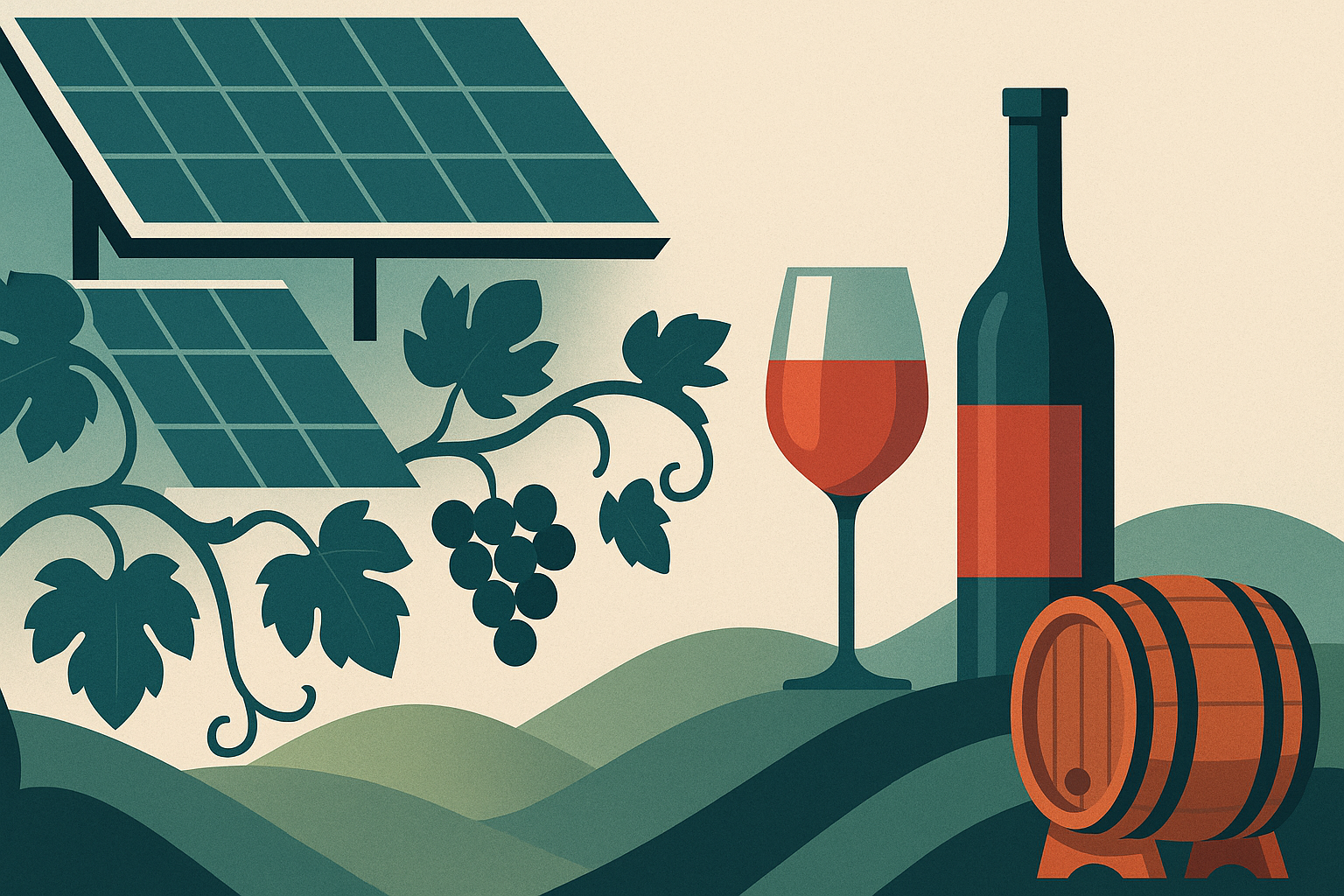
The Dutch figured out how to farm under glass a long time ago. Now Geisenheim University—Germany’s flagship wine school—wants to see what happens when you raise the greenhouse roof and swap it for solar panels over Riesling country. Their VitiVoltaic experiment in the Rheingau uses elevated PV arrays to protect vines from rain, frost, and drought while evening out sunlight. It’s clever. It’s controversial. And it absolutely pokes the natural wine bear.
Why This Matters
Behind every great bottle is a story, and this one matters. It reflects broader trends shaping how wine is made, sold, and enjoyed. Stay curious—your palate will thank you.
As Simon J Woolf reports in The Morning Claret, the question cuts to philosophy: “it raises some interesting questions about what intervention one would consider consistent with natural wine.” —David Schildknecht, via The Morning Claret.
Key Takeaways
- Key themes: natural wine, Rheingau, Riesling—stay informed on these evolving trends.
- The takeaway? Keep exploring, keep tasting, and don’t be afraid to try something new.
Style snapshot: Rheingau, Riesling, and “lighter and fresher”
Rheingau is synonymous with Riesling—Germany’s crown jewel grape known for high acidity, luminous aromatics, and a spectrum from bone-dry to off-dry. In classic form, Rheingau Riesling skews dry to off-dry, medium-bodied, and precise—think citrus, stone fruit, and slatey minerality.
Geisenheim says wines from the test plot are “lighter and fresher—just like it used to be.” —The Morning Claret. Those words can mean different things depending on your palate. Lighter and fresher can be wonderful in Riesling; the style thrives on tension and brightness. But as Emma Bentley suggests in Woolf’s piece, “lighter and fresher” might also mean fruit wasn’t fully ripe—less flesh, more angle. In Riesling, that can translate to zip and charm or feel a bit green if the balance doesn’t land.
Dry/sweet/body check: If you’re shopping, expect Rheingau Riesling to range dry to off-dry with medium body and brisk acidity. If you love racier, lower-alcohol styles, look for Kabinett or wines labeled “trocken” for crispness and clarity.
Context: Tech meets terroir
VitiVoltaic isn’t just a few gadgets tucked in the vineyard; it’s a structural reframe. Elevated solar panels diffuse light, heating wires guard against frost, and drip lines handle drought while powering vineyard operations—some growers even dream of drone tractors on steep slopes. The upside is obvious: fewer crop losses, safer labor demands, and more predictable outcomes in a climate rollercoaster.
But natural wine folks aren’t all-in. Angiolino Maule questions the sun-shielding effect—without direct light, plants don’t work at full tilt, and ripening could stall. Woolf himself calls VitiVoltaic “a step too far” —Simon J Woolf, The Morning Claret. Not because innovation is bad; the natural community already embraces modern resistant varieties (PIWIs) and drones for biodynamic sprays. It’s the terroir question. If you flatten vintage variation and homogenize ripening, are you still expressing place-in-time—or are you engineering consistency?
I sit somewhere between a surf forecast and a lab report. I love science when it keeps small wineries alive and soils healthy. I also love wines that taste like the weather they endured. The magic of Rheingau Riesling is how the best bottles feel like river light and autumn air. If elevated panels make every season behave, we risk dialing down that wild-channel signal to a pleasant, predictable hum.
One more practical thread: economics. Bentley wonders whether the upfront cost pencils out; sure, you can sell excess energy back to the grid, but often at low rates. That makes VitiVoltaic more compelling for larger, capitalized estates than for the small, hand-made crowd—precisely the folks most invested in site expression.
Best occasion + pairing direction
Best occasion: When you’re in the mood for bright, low-octane whites—think spring afternoons, oyster bars, or pre-dinner porch hangs.
Best pairing direction: Lean into high-acid partners—shellfish, sushi, fresh goat cheese, crunchy salads, and anything citrusy or herb-driven. Keep it clean; let the acidity sing.
Closing takeaway
VitiVoltaic is smart climate armor and a bold move toward vineyard-as-infrastructure. The trade-offs are real: stability versus spontaneity, yield protection versus vintage clarity. Natural wine isn’t anti-tech by default, but it is pro-transparency. If this system becomes widespread, let’s demand labeling clarity and open dialogue about how it shapes style. Use solar to power the winery? Love that. Mount panels over living terroir? Proceed carefully—or, as Woolf frames it, maybe not beyond “a step too far.”
This article references “Growing Grapes Under Glass” by Simon J Woolf on The Morning Claret.
Source: https://themorningclaret.com/p/growing-grapes-under-glass