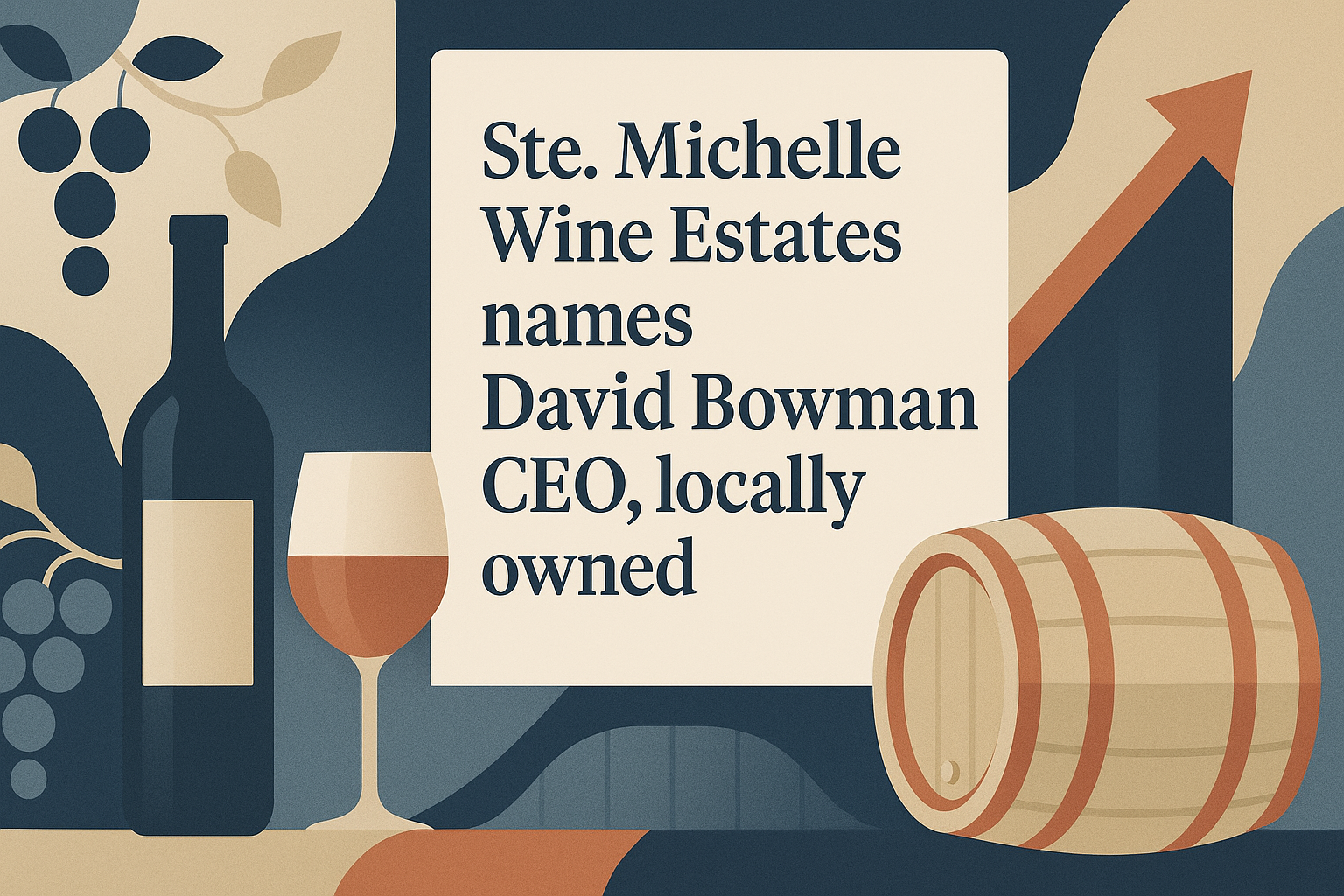

Washington’s largest winery just tightened the laces on its hiking boots. Ste. Michelle Wine Estates (SMWE) has named David Bowman as CEO, transitioning from his co-CEO role alongside Anna Mosier. Mosier shifts to president and chief financial officer. This move rides in right behind the Wyckoff family’s recent purchase of SMWE—bringing the company under local ownership for the first time in over 50 years. For Washington wine, that’s more than a headline; it’s a directional marker.
Why This Matters
The wine world moves fast, and this story captures a pivotal moment. Whether you’re a casual sipper or a dedicated collector, understanding these shifts helps you make smarter choices about what ends up in your glass.
As reported by Sean P. Sullivan at Northwest Wine Report, Wyckoff Farms and Coventry Vale Winery’s Court Wyckoff put it plainly: “David is a true visionary with deep expertise” —Court Wyckoff, via Northwest Wine Report. He added their stewardship aims to “advance Ste. Michelle’s portfolio of iconic Northwest wine brands.” Those few words signal a double-down on the region’s identity and long game.
Key Takeaways
- Key themes: Ste. Michelle Wine Estates, Washington wine, David Bowman—stay informed on these evolving trends.
- The takeaway? Keep exploring, keep tasting, and don’t be afraid to try something new.
What this means for Washington wine
SMWE’s scale has long made it a bellwether for the Columbia Valley and broader Washington scene. Local ownership typically translates to decisions that care about the vineyard next season and the community next decade. Expect a focus on consistency, quality control, and telling the Washington story in a way that resonates—from Riesling (a house hallmark) to the state’s power trio of Cabernet Sauvignon, Merlot, and Syrah.
Washington’s signature style leans clean and fruit-forward but grounded: Riesling ranges dry to off-dry, with bright acidity and citrus/stone fruit; Cabernet Sauvignon is classically dry and full-bodied, with structured tannins and dark fruit; Merlot and Syrah, depending on site and vintage, can swing plush or savory. If leadership leans into terroir expression and transparency—vineyard sources, sustainable practices, vintage clarity—consumers win with better alignment to taste and buy intent.
Style snapshot: staples to know
- Grapes: Riesling (aromatic, dry to off-dry), Cabernet Sauvignon (dry, full-bodied), Merlot, Syrah.
- Region: Columbia Valley and its sub-appellations (Yakima Valley, Walla Walla Valley, Horse Heaven Hills, etc.).
- Descriptors: Dry reds with structure; whites spanning zesty-dry to lightly off-dry; balanced fruit and acidity are the throughline.
None of this is new to SMWE; the interesting part is the governance shift. Local owners tend to think like growers and neighbors, not just numbers. That could mean deeper vineyard investment, clearer brand tiers, and—fingers crossed—continued leadership in sustainability and water stewardship, which are non-negotiables in the Northwest.
Why local ownership matters
The Northwest Wine Report notes this is “the first time in over 50 years that Ste. Michelle has been under local ownership” (Northwest Wine Report). In practical terms, more decisions may be made with regional context top of mind: collaboration with growers, commitments to Washington fruit, and brand messaging that reflects site and season, not just market trends. Bowman stepping into the CEO role and Mosier anchoring operations and finance is a complementary setup—vision plus execution—exactly what a multi-brand portfolio needs in 2026.
For drinkers, this could mean clearer pathways: entry labels that reliably nail style and value, and upper-tier bottlings that speak to specific AVAs with purpose. If you’re building a cellar or just stocking a weeknight rotation, watch how SMWE frames Washington’s strengths—especially Cabernet from Horse Heaven Hills and Riesling throughout Columbia Valley. Don’t expect overnight transformation, but do expect continuity with a more distinctly Northwest accent.
Best occasion: casual dinners, backyard hangs, and larger gatherings where reliable Washington character shines without fuss.
Best pairing direction: Cabernets and Merlots with grilled meats or hearty veggies; Riesling with spicy, citrusy, or herb-driven dishes. Keep it simple and let the acidity do the work.
My take: The Wyckoff-led era puts authenticity at the center. If Bowman and Mosier keep the compass set to site, transparency, and consistency, SMWE can continue to be Washington’s most visible ambassador—without sanding off the edges that make the region interesting. Consider this a vote for more vineyard-forward storytelling and wines that taste like they belong to the place.