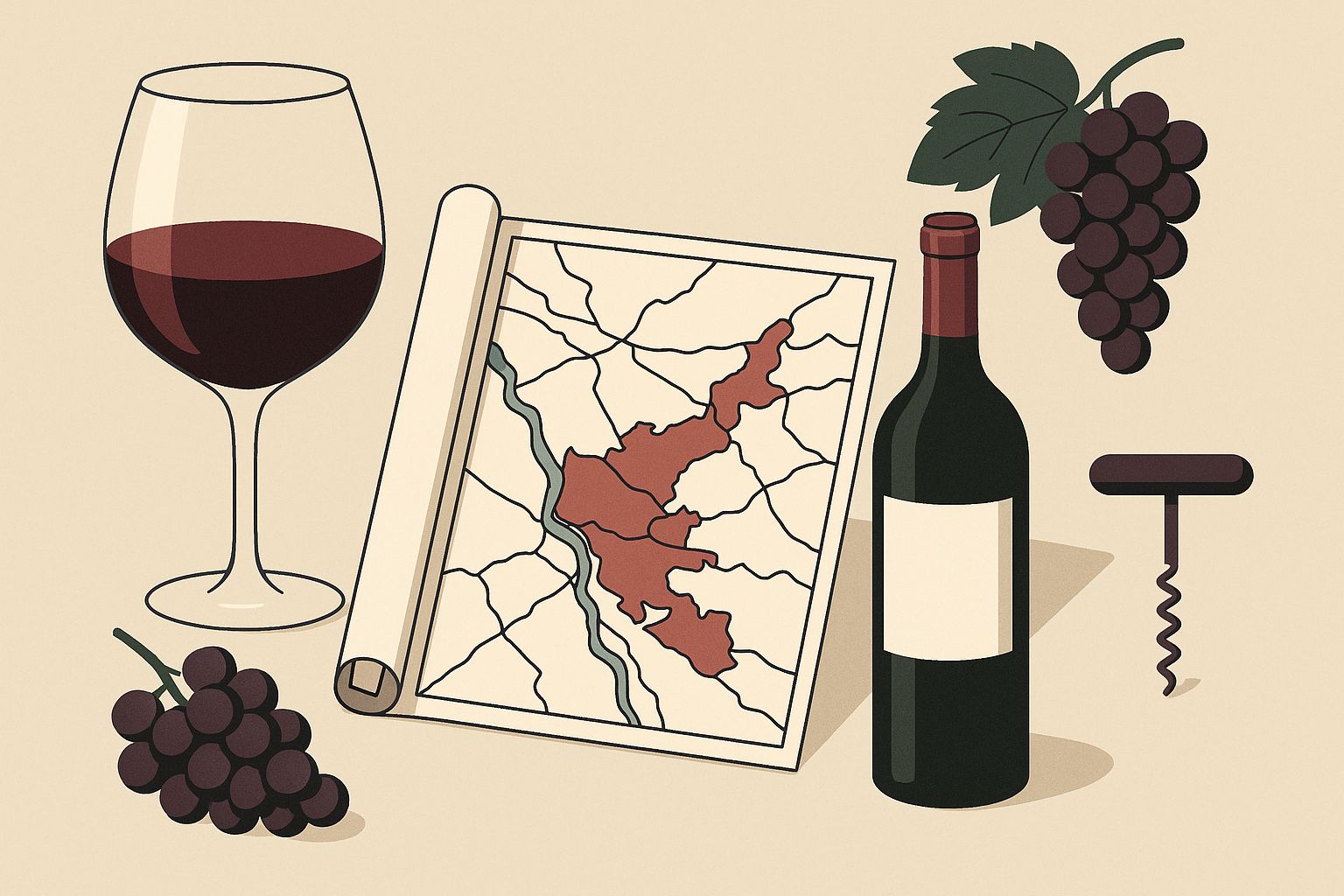

Glassware, decanters, corkscrews—love ’em. But if you want to give a wine lover something that flexes both taste and brain cells, a great map is the move. Inspired by James Molesworth’s feature in Wine Spectator, I’m fully co-signing the idea that cartography belongs in every serious wine lover’s kit.
Why This Matters
Behind every great bottle is a story, and this one matters. It reflects broader trends shaping how wine is made, sold, and enjoyed. Stay curious—your palate will thank you.
As Molesworth neatly puts it: “nothing beats a good map—especially the beloved vintage maps by Louis Larmat.” —James Molesworth, Wine Spectator
Why maps? Because wine isn’t just flavor—it’s place. A well-made vineyard map turns a bottle into a story with coordinates. Larmat’s vintage maps of Burgundy, Champagne, the Rhône and beyond are the visual equivalent of tasting note poetry: they show how slopes, rivers, and parcels shape what ends up in your glass. It’s terroir rendered in ink, and honestly, it’s irresistible.
And yes, this is more than wall candy. When you hang a Burgundy map, you’re not just decorating—you’re decoding. Those patchwork parcels and named crus help you see why a village-level wine from one side of the road sings differently than the premier cru across the way. Champagne? Suddenly the mosaic of vineyards makes sense of why a blanc de blancs from the Côte des Blancs tastes like chalk-dusted citrus while a blend leans into orchard fruit and toast. The Rhône? Terrain gets dramatic, and the flavor map follows suit.
Here’s how to shop smart, surfer-brain meets Ivy-brain:
Pick the right region. Choose a map tied to the drinker’s current obsession. Burgundy for the climats crowd. Champagne for the sparkling soul. Rhône for the Syrah devotees. If they’re still exploring, go with the region they return to most—familiarity makes learning fun.
Mind the scale and style. Larmat’s vintage aesthetic plays nicely with everything from minimal apartments to cozy cellars. If you go smaller, make sure labels are legible; larger maps become conversation centers. Either way, aim for clean framing—simple wood or thin metal to let the map breathe.
Original vs. reproduction. Originals have that patina-of-time charm and collector appeal; good reproductions deliver the scholarship and look at a friendlier price point. Prioritize clarity: a map is only as good as what you can read on it.
Make it a learning ritual. Pair the map with a bottle from one of its highlighted villages or crus. Trace your glass to the parcel. Jot notes in the margin (lightly!) or keep a notebook nearby. It’s like turning your tasting nook into a mini wine lab—no lab coat required.
Display with intention. Dining room, tasting corner, office wall—anywhere you’d naturally linger. Good light helps, but avoid direct sun if you care about longevity. Bonus points for grouping maps by theme: Burgundian reds on one wall, Champagne whites on another. It’s the kind of curation that makes your space feel like a personal wine museum.
Beyond the aesthetics, maps invite curiosity. They nudge you to ask better questions: Where’s the slope? What’s the exposure? How close is the river? These aren’t trivia—they’re the breadcrumbs to understanding why your Pinot Noir whispers violets in one bottle and shouts cherries in another. Eye candy meets brain candy, and both pair surprisingly well with cheese.
If you’re gifting, add a short note with context—why this region matters, what to look for on the map, and a couple of producers whose wines you love from those parcels. You’re not just handing over paper; you’re giving a guided tour. Trust me, that beats yet another gadget destined for a drawer.
One caveat: don’t force it. Not everyone wants to turn their living room into the Côte d’Or. Some folks just want a clean line and a single bottle. Respect that vibe—there’s no wrong way to love wine, only different paths to the same pleasure. But if they’re even slightly curious? A Larmat map is a gentle invitation to go deeper.
Final note: the brilliance of maps is their longevity. Tastes change; tech gets outdated. A great vineyard map stays relevant because the land is the constant. Vintage or reprint, framed or resting on an easel, it’s a compass for your palate—one that quietly improves your drinking life, season after season.
Original author: James Molesworth. Source site: Wine Spectator.
Key Takeaways
- Key themes: wine maps, Louis Larmat, wine gifts—stay informed on these evolving trends.
- The takeaway? Keep exploring, keep tasting, and don’t be afraid to try something new.
Source: https://www.winespectator.com/articles/the-fine-art-of-shopping-carte-121522