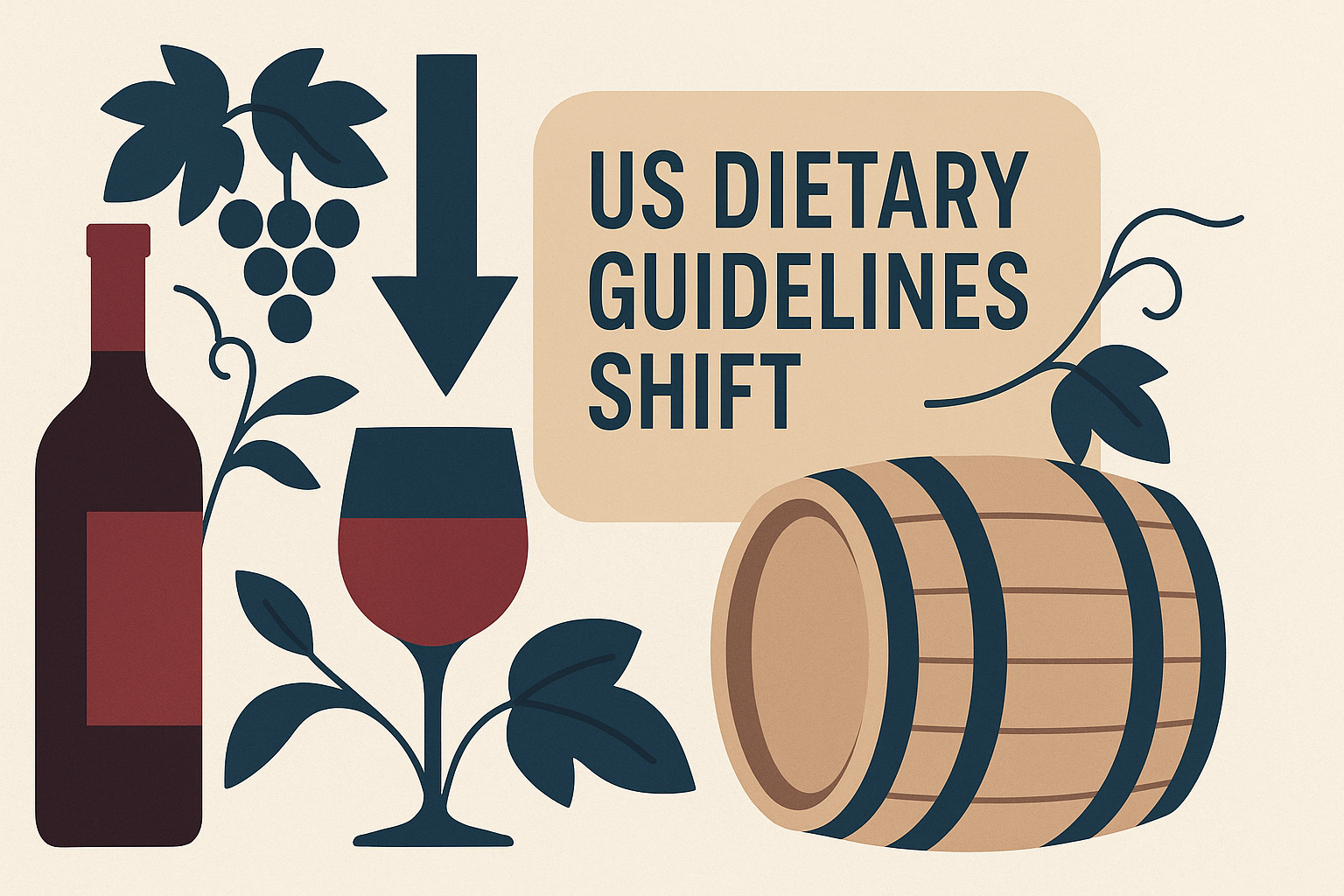

If you caught the headlines, you probably saw the wine world exhale when the new US Dietary Guidelines didn’t go full WHO and declare abstinence the only safe play. But before you pop a cork, let’s talk about what actually changed—and why the long-term vibes for wine might be more overcast than sunny.
Key Takeaways
- Key themes: US Dietary Guidelines, wine industry, moderation—stay informed on these evolving trends.
- The takeaway? Keep exploring, keep tasting, and don’t be afraid to try something new.
Why This Matters
The wine world moves fast, and this story captures a pivotal moment. Whether you’re a casual sipper or a dedicated collector, understanding these shifts helps you make smarter choices about what ends up in your glass.
The big shift is simple: the government moved away from specific daily drink limits and toward a broad nudge. As Wine-Searcher reports, the new guidance says, “Consume less alcohol for better overall health.” —Wine-Searcher
That might sound harmless—almost friendly—but the old numbers (two drinks for men, one for women) gave consumers, restaurants, and wineries a clear reference point. Without those specifics, the message morphs from calibrated moderation to a nebulous caution. And in a world where public health narratives tend to amplify over time, vague guidance can slowly tilt from “less” toward “none.”
Context matters here. The World Health Organization’s drumbeat—no safe level, increased cancer risk, societal costs—has been getting louder. Wine-Searcher notes the WHO has declared there is “no safe level” of alcohol consumption, a stance that lands differently in countries where the state foots the healthcare bill. The nuance is that moderate drinkers often fare better than teetotalers in heart disease and all-cause mortality studies, but that nuance gets lost when policy is built for the average of a whole population, not for mindful individuals enjoying a glass with dinner.
Enter RFK Jr. and an overhaul of the guidelines themselves. In a move that reads like a Michael Pollan cameo, the new framework champions basic, unapologetic common sense and accessibility. The second line is a straight hitter: “The message is simple: eat real food.” —Wine-Searcher It’s nine pages. No labyrinth of tables. And for the most part, that’s great. Ultra-processed foods get called out. Water with meals is the default. Sugar gets benched. Amen.
So where does that leave wine? Somewhere between the salad and the splash. There’s a cultural and culinary argument that wine is part of a “real food” life—grown from grapes, fermented with intent, historically tied to meals and community. But the guidelines carve out beverages as a separate lane and, in policy terms, alcohol sits in the caution zone. The more the “real food” conversation becomes the center of public nutrition, the more discretionary drinks risk getting sidelined, especially in institutional settings (schools, hospitals, elder care) where rules trickle down from guidelines.
Short-term, that probably looks like muddled messaging rather than panic. Long-term, it’s a slow headwind. If “consume less” becomes the default motif in health content, insurance incentives, and wellness apps, the industry will keep defending itself with nuance while public frameworks skew toward simplicity. And simplicity rarely favors fermented nuance.
That doesn’t mean wine should retreat to the cellar. It means the playbook needs updating:
- Lean into meals and moderation. If wine shows up at the table with food, it keeps better company in the health conversation.
- Educate on serving sizes. Two ounces in a tasting room isn’t eight at home—friendly reminders help.
- Quality over quantity. Shift the story from volume to craft, place, and experience—terroir beats tally marks.
- Transparency without fear. Acknowledge risks (breast cancer, impaired driving) while elevating the evidence on heart health and overall mortality in moderate contexts.
Also, let’s be real: Big Food dwarfs Big Alcohol by a few surf breaks. Wine-Searcher points out that food producers have historically weaponized guidelines to shove “healthy” claims onto ultra-processed stuff. If these new guidelines help pivot institutions toward simpler, whole ingredients, that’s a win for actual eating, even if wine has to work harder to justify its seat at the table.
For drinkers, here’s the practical read: don’t expect a daily drink “allowance” to return. Expect a steady drumbeat of “less” from official channels. If you enjoy wine, keep it tethered to meals, company, and clarity—know your own health context, don’t drive afterward, and consider a few dry nights each week. Half the point of a balanced lifestyle is knowing when to keep the glass half full.
So, should the wine industry celebrate? Not really. But it shouldn’t sulk either. The future favors producers and venues that embrace moderation, elevate real food pairings, and communicate like adults. It’s a tougher lane, but it’s also the one where thoughtful wine has always performed best.
Quotes from Wine-Searcher: “Consume less alcohol for better overall health.” and “The message is simple: eat real food.”
Source: https://www.wine-searcher.com/m/2026/01/dietary-guidelines-a-downer-for-wine?rss=Y