
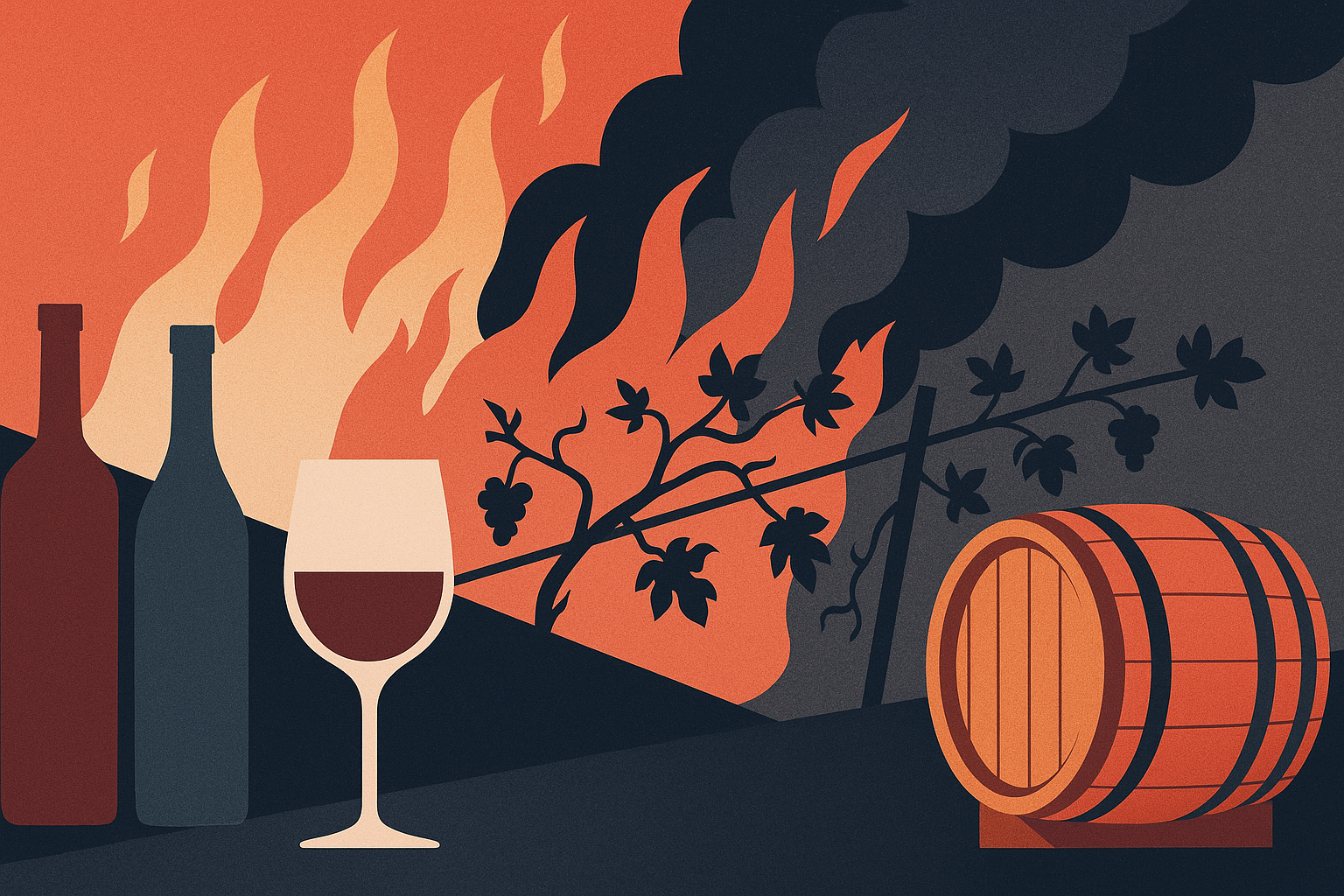

Australian wine country just took a brutal hit. A series of out-of-control bushfires in Victoria tore through vineyards, homes, and storage facilities, leaving a scorched trail from the Strathbogie Ranges to Harcourt. The headlines are heavy: more than 300 acres of vines devastated, an estimated quarter of a million bottles of library stock destroyed, and at least 25 wineries directly affected. That’s not just numbers on a spreadsheet; that’s decades of sweat, patience, and perfectly timed harvest decisions gone in a blaze.
Why This Matters
Behind every great bottle is a story, and this one matters. It reflects broader trends shaping how wine is made, sold, and enjoyed. Stay curious—your palate will thank you.
On the ground, the stories are raw. Winemaker Matt Fowles (Fowles Wine) tried to fend off the Longwood bushfire at his Upton Hill property. He saved the winery, but the family home couldn’t be held. As he told Wine-Searcher:
“What's particularly heartbreaking is that a lot of this was museum stock.
“This was by far the worst I’ve seen.”
— Matt Fowles, via Wine-Searcher
Elsewhere, Elgo Estate announced their vineyard was “devastated” in the Strathbogie Ranges, and the Ravenswood South fire ripped through the town of Harcourt, taking a cool store with it and countless bottles from producers across Bendigo and Macedon Ranges. Wine Victoria chair Dan Sims estimates the loss of museum stock alone will be hard to quantify. As he put it to Wine-Searcher:
“What’s particularly heartbreaking is that a lot of this was museum stock.”
— Dan Sims, Wine Victoria, via Wine-Searcher
For collectors and casual drinkers alike, “museum stock” isn’t just marketing—it’s living history. Those bottles are a timeline of sites, seasons, and decisions; a tasting of how a place tells its story over time. Losing that is like wiping chapters from a book we can’t reprint.
Key Takeaways
- Key themes: Australia, Victoria bushfires, Strathbogie Ranges—stay informed on these evolving trends.
- The takeaway? Keep exploring, keep tasting, and don’t be afraid to try something new.
Smoke taint: the ugly buzzword we all fear
There’s a sliver of relief in the short term. Sims noted the smoke taint threat may be lower because many vineyards hadn’t reached veraison yet. Translation for those who skipped grape physiology: before veraison (when berries soften and turn color), grapes are less permeable, making them less likely to absorb smoke compounds that can later morph into ashy off-flavors. That doesn’t make everything fine, but it’s a meaningful detail in a disaster that offers few silver linings.
Still, smoke exposure is a mosaic issue—timing, intensity, and duration matter. Even without taint, damaged infrastructure, lost fruit, and shaken communities create a long tail for the 2026 vintage and beyond. Replanting isn’t just planting; it’s years of training vines, rebuilding soil, and deciding whether to revive older sites or start fresh.
How wine lovers can actually help
You don’t need a firefighter’s rig to be part of the solution. Start simple. Sims’ advice is as practical as it gets:
“Buy direct, if you can.”
— Dan Sims, via Wine-Searcher
– Order from winery websites and mailing lists, even if shipping takes longer. Patience is part of the support.
– Visit cellar doors when authorities say it’s safe. Bring friends, make a day of it, and leave with bottles.
– Seek out producers from the Bendigo, Macedon Ranges, Strathbogie Ranges, and Yarra-adjacent zones. Names mentioned in the fire impact include Joshua Cooper, Blackjack Wines, Killiecrankie, Sutton Grange, Wine by Sam, Antcliff Wines, and more.
– If you’re a collector, consider replacing what you can, and treasure what’s already in your cellar from these regions.
Supporting recovery also means respecting the pace. These are small teams juggling life, logistics, and land after trauma. Some will replant. Some will pause. Some, like Elgo Estate, may close. Every path is valid.
What’s next for Victoria’s wine community
Emergency funds are already in motion, with more expected at state and national levels. The CFA is still working active fires, and sadly, one life has been lost. In the months ahead, decisions will pivot from crisis to strategy: how and where to re-establish vineyards, what to do about trellising and posts literally burned away, and how to rebuild cellar programs when library stock has turned to ash.
Here’s the thing about wine communities: they bend, they don’t break. The neighbor-on-neighbor support here has been remarkable—temporary housing, offers of help, and shared resources. When the ocean’s messy and the wind’s wrong, you still paddle out because that’s what you do. Victoria’s wine world is paddling back out.
If you want to stay plugged in, Wine Victoria has a running list of affected producers and ways to support. Whether your palate leans to Macedon’s spicy reds, Strathbogie’s high-country freshness, or Bendigo’s sun-kissed structure, keep the faith and keep buying. This is a long game, and your next order might be the nudge that keeps a team employed or a vineyard replanted.
We’ll keep tracking the recovery, the smoke-taint science as the season progresses, and the human stories that remind us a bottle is more than fermented grape juice—it’s place, people, and time. Raise a glass to Victoria, and make sure it’s one you paid for directly.
Source: https://www.wine-searcher.com/m/2026/01/wildfires-rip-through-victoria-wine-country?rss=Y