
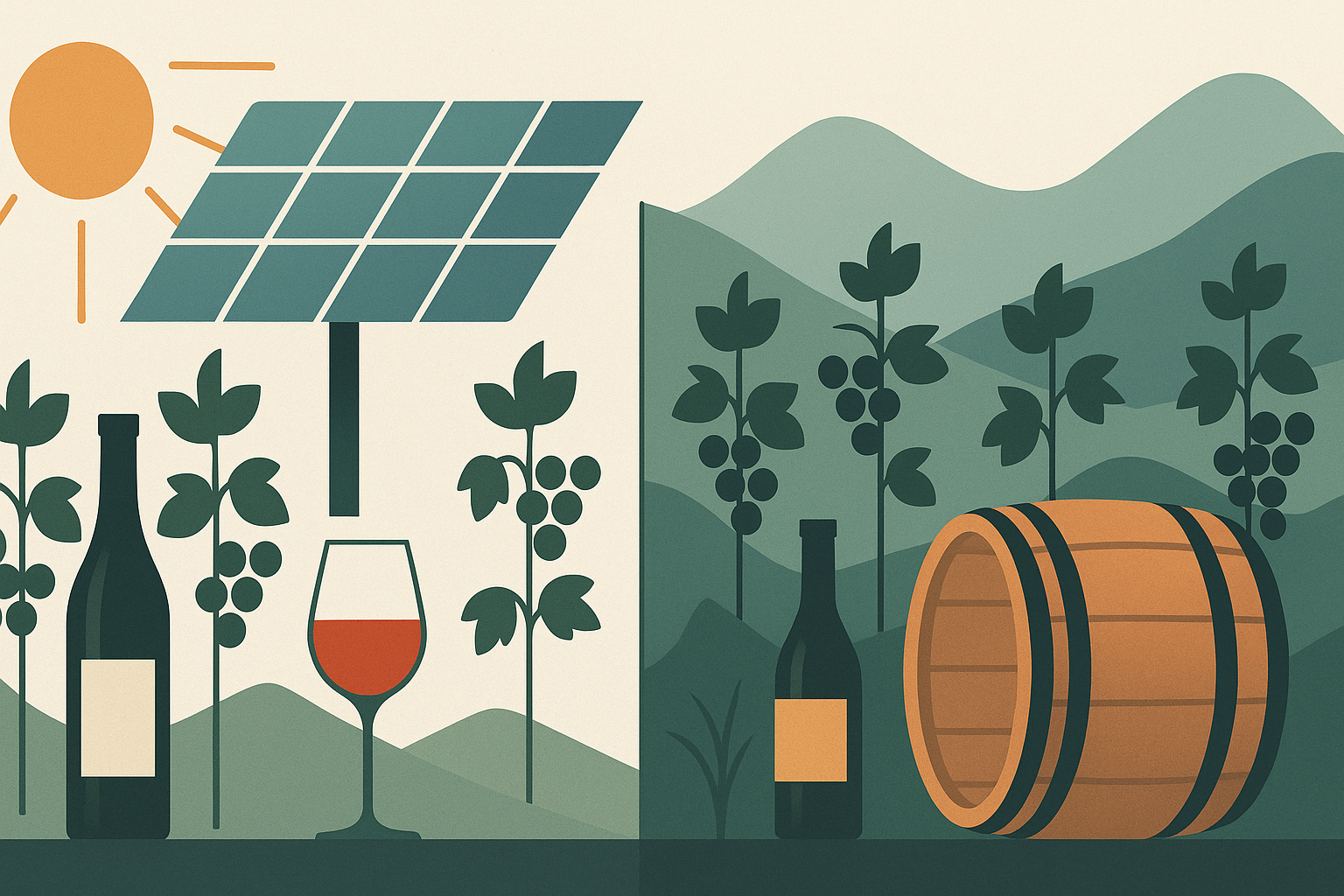

VitiVoltaic and Rheingau vines: solar shade vs. true terroir
File this under: climate-solution or terroir-tampering? Simon J Woolf at The Morning Claret digs into Geisenheim University’s VitiVoltaic project—solar panels mounted high above vineyards in Germany’s Rheingau—promising protection from frost, downpours, and drought while diffusing sunlight across the canopy. It’s a big, shiny idea with real-world implications for how wine is grown, and how it tastes.
Why This Matters
This isn’t just another headline—it’s a signal of where the wine news is headed. Paying attention now could save you money, introduce you to your next favorite bottle, or simply make you the most interesting person at your next dinner party.
As Woolf notes, “It’s almost like growing vines in a greenhouse.” — Simon J Woolf, The Morning Claret. That’s a compelling pitch if you’re staring down late frosts or biblical rains. But it also raises the existential question: if you shield vines from the extremes of a vintage, are you still expressing the vintage at all?
Key Takeaways
- Key themes: VitiVoltaic, Rheingau, terroir—stay informed on these evolving trends.
- The takeaway? Keep exploring, keep tasting, and don’t be afraid to try something new.
Style snapshot: Rheingau reality vs. solar shade
Rheingau is Riesling country. Traditionally, you’ll see dry to off-dry styles with high acidity, medium body, and that tightrope of citrus, stone fruit, and minerality that keeps sommeliers up at night (in a good way). Under VitiVoltaic, the experimental wines are reportedly “lighter and fresher — ‘just like it used to be,’” according to the University’s early notes relayed in Woolf’s piece. Emma Bentley counters that “lighter and fresher” could simply mean under-ripe fruit—fair point when sunshine is filtered and heat moderated.
Angiolino Maule’s agronomic caution hits hard: “If there isn’t direct sunlight the plants don’t work.” — Angiolino Maule, quoted by Simon J Woolf (The Morning Claret). Translation: photosynthesis isn’t optional, and ripeness is earned, not engineered. In the Rheingau, that balance—sun, slope, river influence—isn’t just scenery; it’s the recipe.
Best occasion: If these wines trend lighter, think daytime pours and aperitif moments rather than fireside contemplation.
Best pairing direction: Lean toward bright, high-acid matches—ceviche, simple sashimi, crisp salads, or chèvre. Keep it fresh, keep it clean.
Context: climate resilience, labor realities, and the terroir line
Let’s be honest: not every grower has the labor pool of a decade ago, nor the weather pattern of a century ago. Woolf’s piece threads this needle: tech can be pragmatic, even humane, especially when steep sites or worker shortages push farms toward mechanization. You’ll find drone tractors, machine harvesting debates, and biodynamic spray drones floating into the conversation—tools that reduce soil compaction and fossil fuel use while keeping wineries alive.
And then there’s the PIWI chapter—disease-resistant crossings like Solaris or Souvignier Gris that many natural producers already embrace to avoid heavy copper and sulfur schedules. As Woolf points out, the natural community can be both idealistic and inventive. Modern resistant varieties may be lab-born, but they’re often vineyard-friendly.
VitiVoltaic, though, feels categorically different. Shielding vines with elevated solar arrays plus heating wires and drip lines is a macro-intervention. It doesn’t just nudge a practice; it recasts the growing environment. If terroir is the honest interaction of vine, site, and season, then editing the season begs big questions. Woolf frames it perfectly: the magic of wine is its ability to articulate vintage and climate differences. Flatten those differences and you don’t just change the flavor—you change the storytelling.
On the flipside, energy independence isn’t the villain here. Solar power can absolutely run winery operations without hovering over the vines. It’s a win for carbon math and a non-issue for terroir.
Where I land: protect, don’t homogenize
As a Californian who’s watched vineyards dodge fires, floods, and freak winds, I respect smart protection. But VitiVoltaic edges toward greenhouse logic: uniform light, moderated temperatures, risk dampened to near nil. That stability can save crops, and that matters. Yet wine isn’t just agriculture—it’s narrative. Rheingau Riesling earns its tension through the weather’s mood swings. Dial that down too far and you may end up with pleasant, tidy wines that forgot to bring their personality.
Or put more simply: climate resilience is the assignment; terroir distortion is not the extra credit. If the project’s outcomes stick to “lighter and fresher,” some drinkers will cheer. Others—and I’m in this camp—will wonder if we kept the bones but lost the soul.
Woolf opens the door with a fair provocation: “It raises some interesting questions about natural wine.” — David Schildknecht, via The Morning Claret. The right answer probably isn’t a hard no; it’s a cautious maybe, used sparingly, where survival demands it—and where the wine still tastes like the place it came from.
Source: https://themorningclaret.com/p/growing-grapes-under-glass