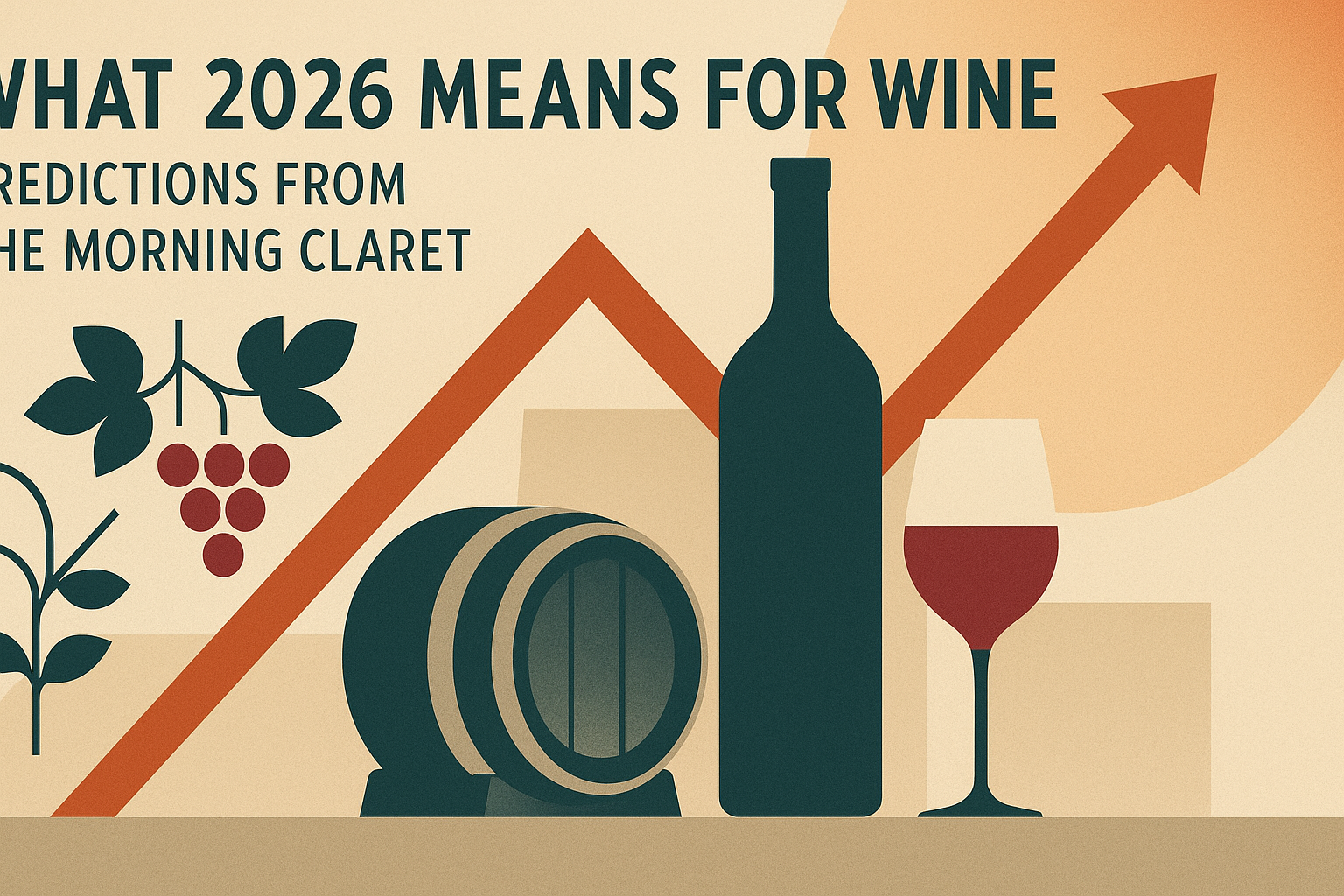

New year, new crystal ball — and this one comes courtesy of Simon J Woolf and The Morning Claret. Woolf kicks off 2026 with a wink and a nudge, admitting his team’s 2025 calls didn’t exactly stick the landing:
Key Takeaways
- Price points mentioned range from $30 to $30, offering options for various budgets.
- Key themes: wine predictions 2026, The Morning Claret, Simon J Woolf—stay informed on these evolving trends.
- The takeaway? Keep exploring, keep tasting, and don’t be afraid to try something new.
Why This Matters
The wine world moves fast, and this story captures a pivotal moment. Whether you’re a casual sipper or a dedicated collector, understanding these shifts helps you make smarter choices about what ends up in your glass.
“100% of the predictions we made for 2025 did not come true.”
— Simon J Woolf, The Morning Claret
Honestly, refreshing. There’s something honest about a wine writer owning the miss and still jumping back in the barrel. That playful energy sets the tone for a sharper question: what can we actually expect this year in wine — and how should we navigate it without turning into doomscroll sommeliers?
The piece teases a headline that’s just begging to be decanted: “Leaked report from Michelin Grapes will shock wine lovers.” Whether that report exists or is just a beautifully fermented joke, there’s a genuinely interesting idea bubbling under the surface — what happens when we start rating grapes and vineyards with the same ceremony as restaurants? And more importantly, who benefits?
In that spirit, here’s our DrinkingVino take on 2026’s likely shifts — inspired by Woolf’s vibe, filtered through our own palate, and grounded in what we’re already seeing on the ground, in vineyards, cellars, and yes, at the beach.
Packaging grows up: lighter, smarter, and way less fussy
Expect more lightweight glass, refill programs, and formats that don’t pretend to be “quirky” for the Gram. Cans and boxes aren’t novelties anymore — they’re functional, lower-impact, and perfect for weeknights. The punchline? Producers who make delicious wine that travels well in non-glass formats will win hearts (and shipping invoices). Quality-first, format-second.
Climate-resilient grapes finally get their spotlight
We’ve been side-eyeing the heat maps for years. 2026 is when we see more mainstream love for climate-tough varieties and smart vineyard practices. Think Assyrtiko, Touriga Nacional, Albariño, and hybrid crossings designed for resilience. Regions edging north will lean into fresher styles, while warmer zones find shade in canopy tweaks and picking strategies. Less panic, more pragmatism.
Alcohol levels: balance beats bravado
The pendulum keeps swinging toward drinkability. Expect a wave of precise, lower-alcohol bottlings that don’t taste like compromise. Not every wine is a lightning bolt — some should be ocean breeze. Winemakers who nail ripeness without over-extraction will keep surfers and scholars equally stoked.
AI in the vineyard: useful tool, not a new god
We’re bullish on data-driven farming — sensors, heat stress models, precision irrigation — used by people who understand the land. AI can flag issues early and save resources; it cannot taste a ferment or read a stormy sky like a farmer with dirt under their nails. Human judgment stays undefeated.
Direct-to-consumer gets more human
Wineries will lean into transparent storytelling and smaller, tighter clubs. Less “exclusive allocation,” more community. Think quarterly drops, honest notes about vintage challenges, and Zoom tastings that don’t feel like corporate webinars. The best producers invite you into their process rather than their marketing apparatus.
Hospitality: tasting rooms as hangouts, not museums
Experiences will matter — but not the performative kind. Expect casual, music-friendly spaces; flights that showcase technique without the lecture; and more food with soul (olive oil, local bread, cured fish, simple salads). Trust the vibes, not just the varietals.
Value zones: the sweet spot under $30
Inflation softened but didn’t vanish. Smart buyers will mine Portugal, Spain, Greece, and parts of Eastern Europe for wines that drink above their class. If you’re chasing Barolo magic on a weekday budget, try Nebbiolo from Alto Piemonte, Gattinara, or even Valtellina. The hunt is half the fun, and the other half is pizza.
“Michelin Grapes”: a cheeky idea with real stakes
If some version of grape/vineyard ratings emerges, let’s hope it rewards sustainability, labor practices, and deliciousness across styles — not just power and price. The industry doesn’t need another gatekeeper; it needs better signals for quality and responsibility that help consumers discover new producers, not funnel them into a luxury cul-de-sac.
Woolf closes the setup with a classic teaser:
“Here is what the next 12 months will look like in wine.”
— Simon J Woolf, The Morning Claret
We’ll take that invitation and paddle out: 2026 isn’t about hype cycles; it’s about common-sense evolution. Better packaging, smarter farming, more inclusive hospitality, and labeling that doesn’t need a decoder ring. Drink what tastes alive. Support producers who treat people and land with respect. And remember — forecasts are fun, but the real action is in the glass.
Original author: Simon J Woolf. Source site: The Morning Claret.
Source: https://themorningclaret.com/p/our-predictions-for-2026