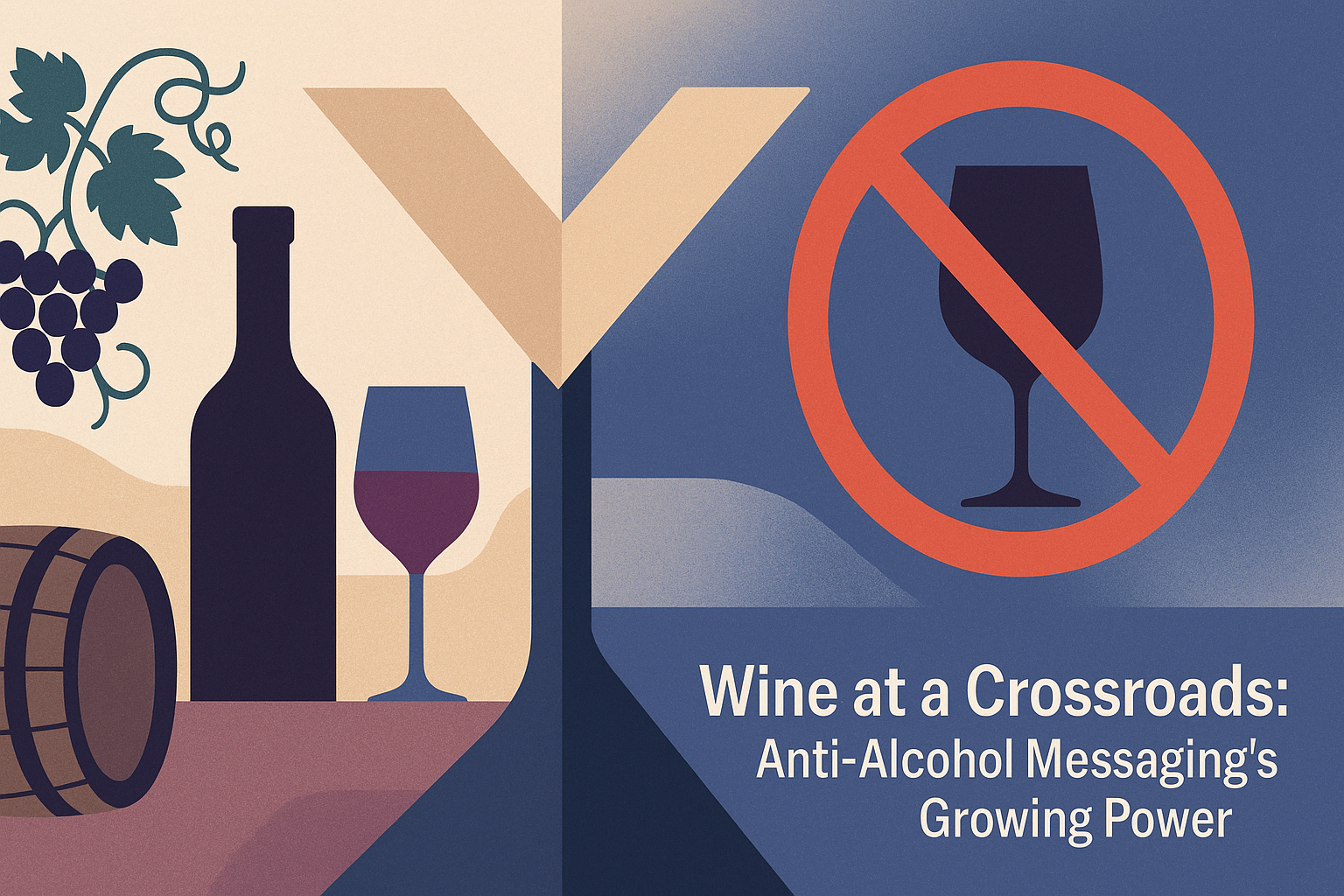

If you’ve felt a chill in the air around wine lately, you’re not imagining it. The Morning Claret’s Simon J Woolf just took stock of the mood and didn’t mince words: “it doesn’t feel like the brightest moment for wine.” (Simon J Woolf, The Morning Claret)
Why This Matters
This isn’t just another headline—it’s a signal of where the wine news is headed. Paying attention now could save you money, introduce you to your next favorite bottle, or simply make you the most interesting person at your next dinner party.
From global sales slipping to policy shifts that read like the end credits of our Merlot era, the anti-alcohol narrative isn’t a blip—it’s a trend line. And while I’m a California-based optimist who still believes in Pinot with roast chicken, I’m also a realist: this is a cultural sea change we need to understand, not dismiss.
Key Takeaways
- Key themes: wine industry, anti-alcohol messaging, WHO guidelines—stay informed on these evolving trends.
- The takeaway? Keep exploring, keep tasting, and don’t be afraid to try something new.
What’s driving the chill
Woolf outlines a tightening public-health stance, with the World Health Organization’s “no safe level” position echoed by governments. Canada reduced weekly guidance to two standard drinks in 2023; the U.S. Surgeon General followed in January 2025 with similar “no safe limit” language. China banned alcohol at state events entirely. Even friendly traditions—like hospital hampers including a bottle—are quietly disappearing.
That matters because wine has historically enjoyed a nuanced place in culture—food, family, conversation, ritual. But the current messaging tends to flatten all alcohol into one monolith, erasing differences in context, quality, and consumption style. As Woolf frames it, the anti-alcohol lobby is “definitely, positively coming for us,” and it’s coming with a simplicity that sells: zero is easy to communicate, and fear always finds an audience.
Where wine fits in a health-first world
Common knowledge used to be: moderate wine, especially with food, could be part of a balanced lifestyle. Science has never been one-note, but public messaging is trending that way. In practice, the healthiest wine culture has always looked like the Mediterranean table—wine as a complement, not a coping mechanism. Dry styles, moderate alcohol, shared meals, and social pacing do matter.
Woolf’s piece challenges us to reckon with a future where nuance loses market share to absolutism. It’s not about ignoring risk; it’s about defending context. If you care about wine’s place at the table, this is the moment to be precise in your habits and vocal in your values.
How mindful drinkers—and the industry—respond
Three practical moves:
• Get comfortable discussing alcohol by volume (ABV), portion size, and pacing. Wine service can be as intentional as a pour-over coffee.
• Lean into quality over quantity: wines balanced in fruit, acid, and alcohol are easier to savor slowly. Dry styles with lift and texture help the “sip, don’t slug” ethos.
• Keep wine anchored to food. When wine shows up with salt, fat, acid, and umami, most people naturally drink less and enjoy more.
For producers and retailers, transparency matters. Clear labeling, smaller formats, and education-forward hospitality are not capitulations—they’re good service. If wellness culture is the wave, the smart move is learning to paddle into it rather than getting rolled.
A respectful counterpoint to zero
Abstinence is a valid choice. Full stop. But the idea that all alcohol experiences carry equivalent risk misses how people actually drink. Wine’s best expressions—whether a lithe Loire Chenin, a savory Sangiovese, or a coastal California Pinot Noir—are built for food, conversation, and time. That doesn’t make wine “health food.” It makes it culture, which deserves a different lane than lowest-common-denominator consumption.
Woolf’s article doesn’t pretend this tide is turning back soon. It does, however, argue for defending nuance without defensiveness. On that, we’re aligned.
Style snapshot
• Category: Wine culture and policy
• Mood: sober (pun intended), but not fatalist
• Consumption lens: dry, moderate ABV, food-first, conversational pacing
Best occasion + pairing direction
Best occasion: A sit-down dinner with friends where conversation outlasts the bottle.
Best pairing direction: Keep it savory and umami-driven—think roasted poultry, mushrooms, aged cheeses—so you sip, not gulp.
Closing thought: If the narrative is going to be “nothing,” we can still answer with “something” better—intentional, delicious, and shared.
Source: https://themorningclaret.com/p/the-last-topic-i-wanted-to-write-anti-alcohol-messaging