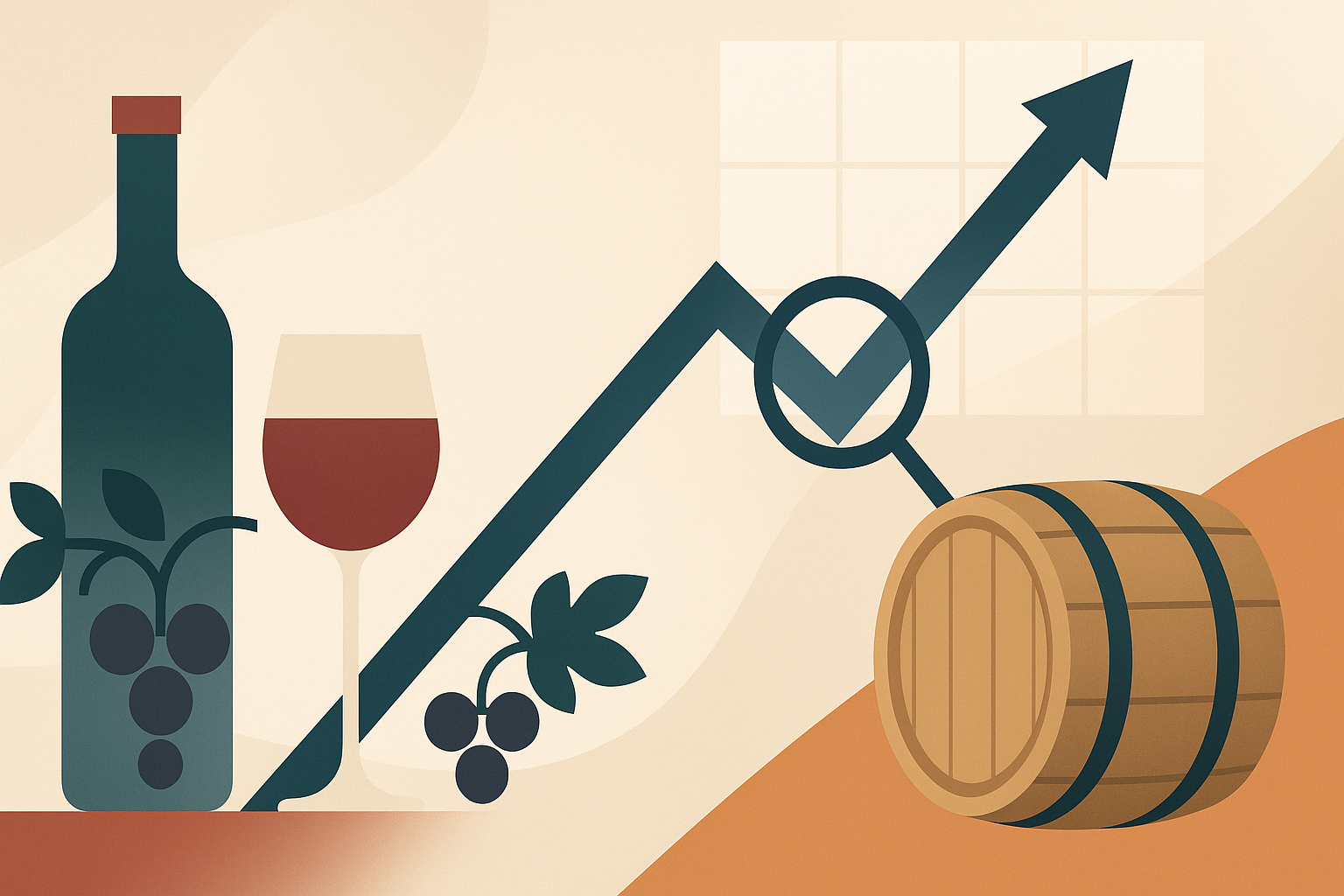

If your feed has been serving up doom-scrolls about wine’s slow fade, you’re not alone. But buried under the headlines is a sunnier story emerging from Wine-Searcher’s data: curiosity is creeping back, availability is expanding, and critics are nodding harder. Translation: the patient has a pulse—and maybe even a solid resting heart rate.
Key Takeaways
- Key themes: wine industry trends, Wine-Searcher data, consumer behavior—stay informed on these evolving trends.
- The takeaway? Keep exploring, keep tasting, and don’t be afraid to try something new.
Why This Matters
Behind every great bottle is a story, and this one matters. It reflects broader trends shaping how wine is made, sold, and enjoyed. Stay curious—your palate will thank you.
“There are still reasons to be cheerful.”
Wine-Searcher
Let’s start with the attention pillar. Searches were up about 2 percent in 2025 versus 2024, with the US maintaining its heavyweight status—roughly 45 percent of all searches and up 2.1 percent. The real eye-openers: Brazil surged 18.1 percent, Canada climbed 8.7 percent, and Mexico rocketed a massive 33 percent. Yes, the UK and China dipped (down 2.3 percent and 4.1 percent respectively), but the directional story globally is encouraging. When people are searching, they’re signaling intent—even if they don’t pull the cork every time.
“There are more people searching for wine.”
Wine-Searcher
Availability is another bright spot. Wine-Searcher now tracks 18.3 million offers across 120 countries, with the top 10 markets accounting for roughly 85 percent. That’s an enormous shelf—even if it’s a digital one. For drinkers, that means more opportunities to find the right bottle at the right price. For producers and retailers, it’s a reminder to keep your digital house tidy: listings, vintages, scores, and pricing matter when shoppers have options and two tabs open.
Quality is quietly climbing, too. With more critics on board, average scores are nudging upward across key countries. The Old World leaderboard will make some Burgundy loyalists do a double-take: Austria sits at 91.5 on average, followed by Germany at 91.32, Switzerland 90.62, Hungary 90.47, and Italy 90.12. Then come France at 90, Spain 89.91, Portugal 89.49, and Greece 89.29. The New World isn’t slacking either: Australia leads at 90.87, New Zealand at 90.68, and the US at 90.38, with Argentina (89.99), South Africa (89.83), and Chile (89.5) close behind.
Seeing Austria and Germany at the top shouldn’t shock anyone who’s spent time with Riesling, Grüner Veltliner, or the new wave of Spätburgunder. These countries have quietly upgraded precision and consistency, and critics are rewarding that work. Year-on-year, the US, France, Italy, and Spain also improved their averages—proof that better farming, cleaner cellars, and smarter oak decisions are paying dividends. Climate shifts and expanded critic coverage likely play a role, but the takeaway is simpler: there’s a lot of good wine out there right now.
On the regional level, France still flexes, but the headline isn’t just Romanée-Conti (94.4) and Montrachet (93.85)—the Alsace show is stealing scenes. Clos Jebsal (94.42), Clos Saint Urbain (93.98), and Clos Sainte Hune (93.88) all sit near the summit. If you’ve been sleeping on Alsace, consider this your friendly wake-up. High acid, layered aromatics, and food-pairing flexibility from sushi to roast chicken—Alsace’s best bottles can stun without requiring a second mortgage.
“Wine is getting better.”
Wine-Searcher
So what do we do with all this? If you’re a drinker, use the data as a compass:
- Lean into Austria and Germany for sharp value and precision—think Riesling for seafood nights and Grüner for anything green and herby.
- Explore New World consistency: Australia for modern Syrah, New Zealand for laser Pinot, and US producers dialing in balance over brawn.
- Don’t sleep on Alsace—the grand crus mentioned are benchmarks, but plenty of producers deliver everyday brilliance.
If you’re on the trade side, consider the signals: search growth in the Americas suggests content, discovery, and inventory targeted to Brazil, Canada, and Mexico could be smart plays. With 18.3 million offers live, differentiation matters—curation beats catalog sprawl. And if your shelves skew Old World classic, maybe slip some Austria and Germany into prime real estate and watch the hand-sells get easier.
None of this negates the consumption headwinds—those are real and deserve sober consideration. But momentum starts with interest, and interest is measurably rising. The data suggests the wine story isn’t a tragedy; it’s a recalibration. People still want delicious, well-made bottles that fit their budgets and their Tuesday tacos.
“Where there’s life, there’s hope.”
Wine-Searcher
Bottom line: keep exploring, keep asking questions, and don’t let the gloomy headlines pick your bottles for you. The wine world is big, dynamic, and—by the numbers—getting better. That’s worth a toast, preferably something from a steep slope in the Mosel or a tidy vineyard in the Wachau. And if you insist on Burgundy, well, I’m not going to argue—just save me a glass.
Source: https://www.wine-searcher.com/m/2026/01/wine-data-shows-causes-for-optimism?rss=Y